
A shelf count is a view of a place at a time
A counter finds 97 units where the report shows 100. It is tempting to enter a reduction of three and move on. Before doing that, ask whether the report and the count describe the same place at the same point in the workflow.
Units may have moved into pick totes, arrived from reserve storage or been placed in an exception area while the count was underway. A cycle-count process needs a way to account for those movements. The buyer's question is not simply how often a 3PL counts. It is how the provider prevents a count from creating a second error.
Distinguish a location balance from an availability figure
Shopify describes on-hand inventory as the total of available, committed and unavailable units. Available inventory is the quantity that can be sold; it excludes committed and unavailable stock. Those are commerce-platform states, not a specification for how every warehouse records bins and totes. Shopify inventory states.
Ask the provider which balance a count corrects. A physical count of all units at a location should not be compared casually with a sellable-only quantity. Nor should a pick-face count be treated as the whole warehouse count when other units sit in reserve or packing areas.
Follow one movement example
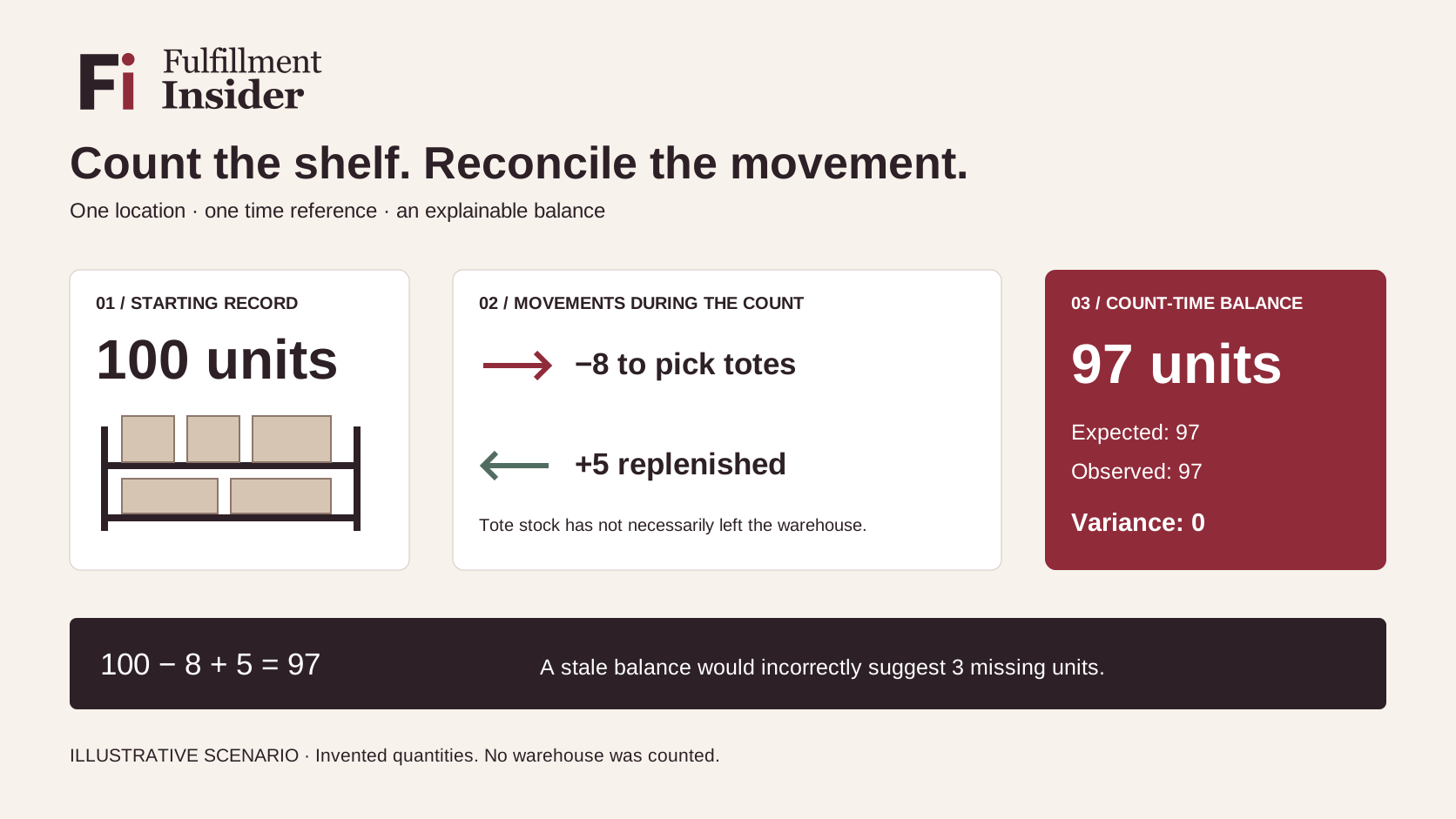
We calculated one illustrative location reconciliation. The numbers are invented to expose a timing issue; no warehouse was counted.
| Event within the defined count period | Shelf units |
|---|---|
| Starting shelf balance | 100 |
| Eight units moved from shelf to pick totes | -8 |
| Five units replenished into the shelf | +5 |
| Expected shelf balance at count time | 97 |
| Observed shelf count | 97 |
Comparing 97 with the stale 100 suggests a shortage of three. Including the two documented movements gives an expected 97 and a variance of zero. Moving the eight units to totes does not by itself mean they have left the warehouse.
The example does not establish that a real difference is harmless. Missing movement records, incorrect quantities or a count at a different time could change the conclusion. Preserve the uncertainty until the evidence supports an adjustment.
Ask how the count window is controlled
A provider might pause work at the selected location or use a process that reconciles movements during the count. Ask it to demonstrate the method it actually supports. The record should identify the counted location, product, time reference, relevant movements and person reviewing the result.
A temporary pause also needs a defined end. Confirm how the provider avoids leaving stock unavailable after the count is accepted. If picking continues, ask how a late-posted transaction is detected before an adjustment is finalized.
Review the adjustment, not just the count frequency
Request an anonymized example showing the initial discrepancy and its final explanation. Look for a separate outcome for “movement reconciled” and “physical variance confirmed.” These are editorial evidence requests, not a claim that a particular software screen is mandatory.
For a pilot, choose a product that is being picked and replenished so the demonstration includes a real boundary problem. Agree on scope with the provider; do not disrupt live operations without a plan. A useful count produces an explainable balance, not merely a fresh timestamp.
Related reading
Sources
- https://help.shopify.com/en/manual/inventory-and-locations/fundamentals/inventory-states — accessed 2026-10-23