
Find out where the work gets stuck.
A closer look at the handoffs behind an order: receiving, stock updates, packing, returns, and the exceptions between them.
43 practical guides. Free tools and downloads. No email required to use the cost worksheet.
 Field notes / November 04, 2026
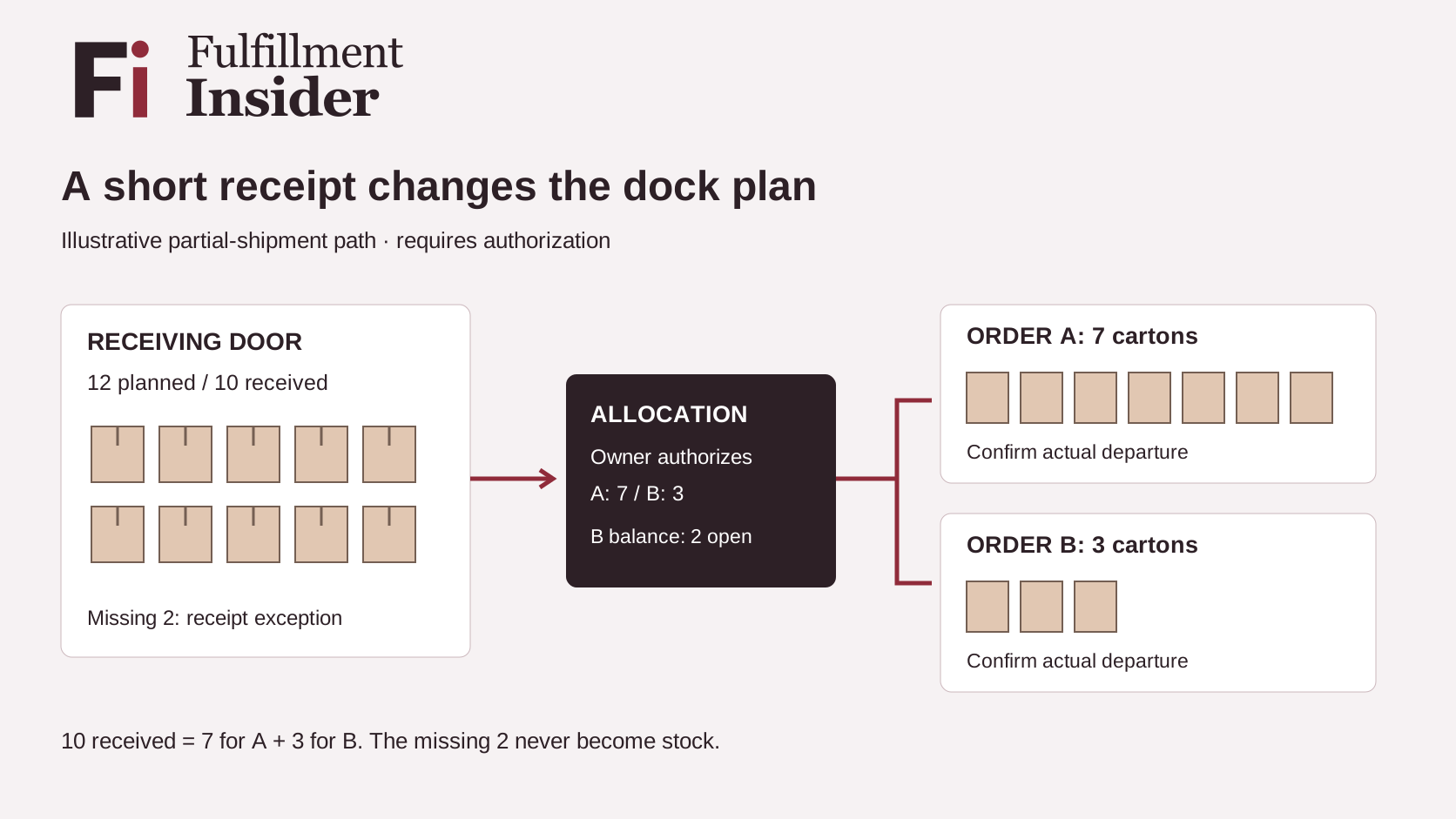
A Cross-Dock Shortage Still Needs an Inventory Decision
Reconcile what physically arrived before confirming outbound allocations. Cross-docking can shorten storage time, but it does not make a planned carton a received or shipped carton.
Read the guide →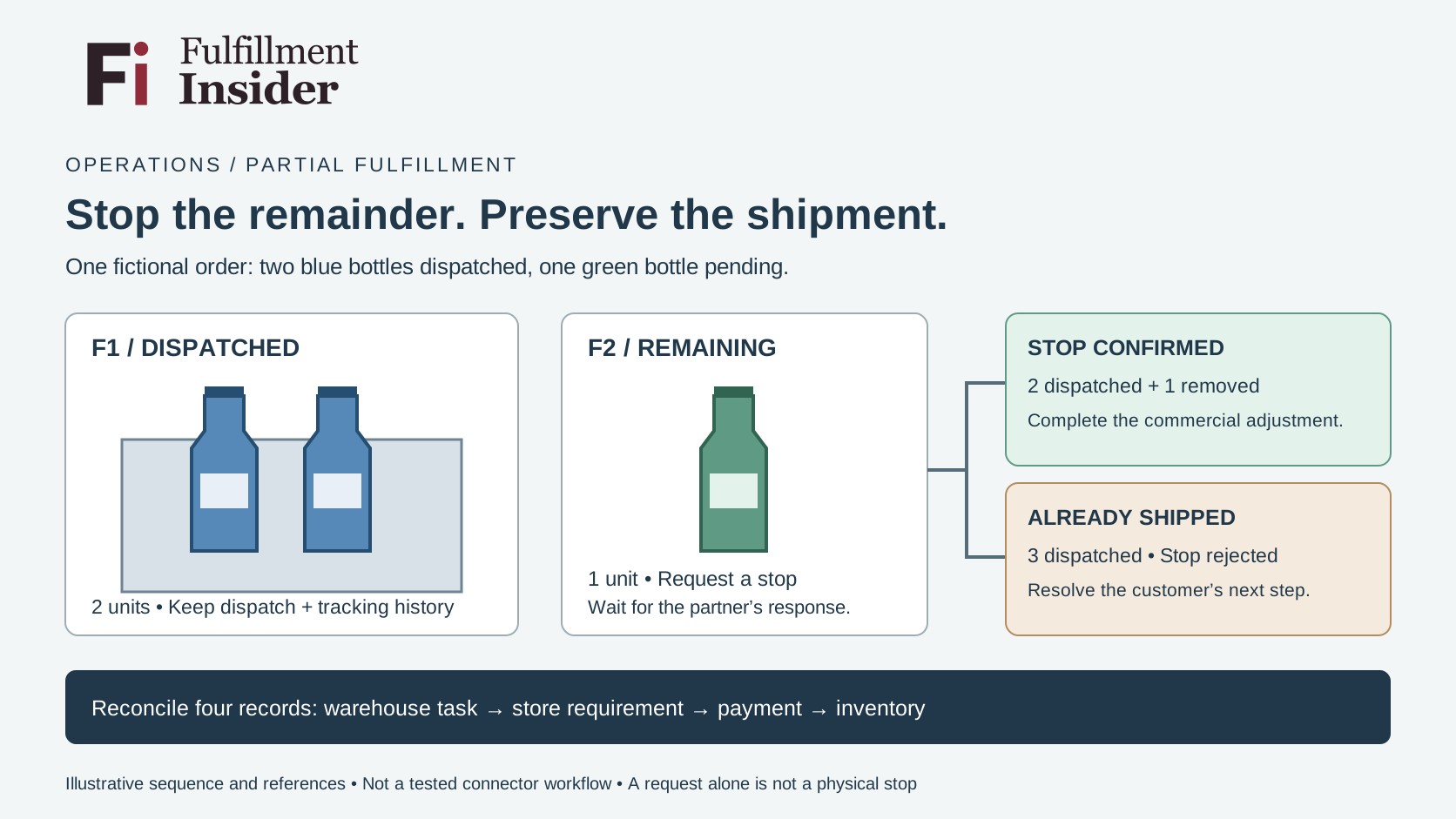 Field notes / November 01, 2026
Stop the Remaining Items Without Rewriting the Parcel Already Shipped
Identify the exact unshipped quantities and obtain the fulfillment partner’s response before treating them as stopped. Keep the parcel already dispatched and its history intact.
Read the guide →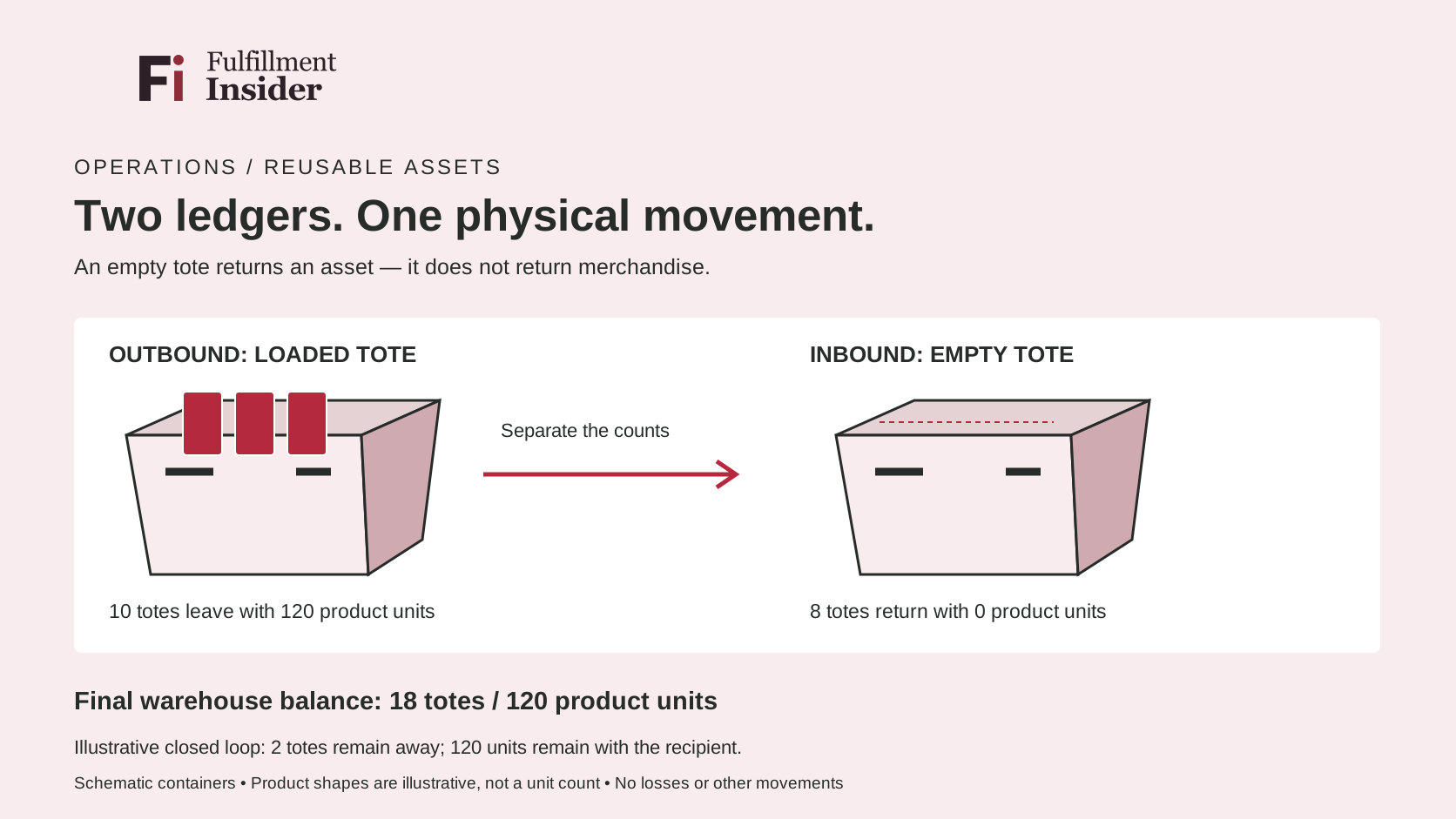 Field notes / October 30, 2026
Count the Reusable Tote Separately From What Is Inside
A reusable container and its contents need separate movements. Receiving an empty tote should close an asset movement without creating merchandise stock.
Read the guide →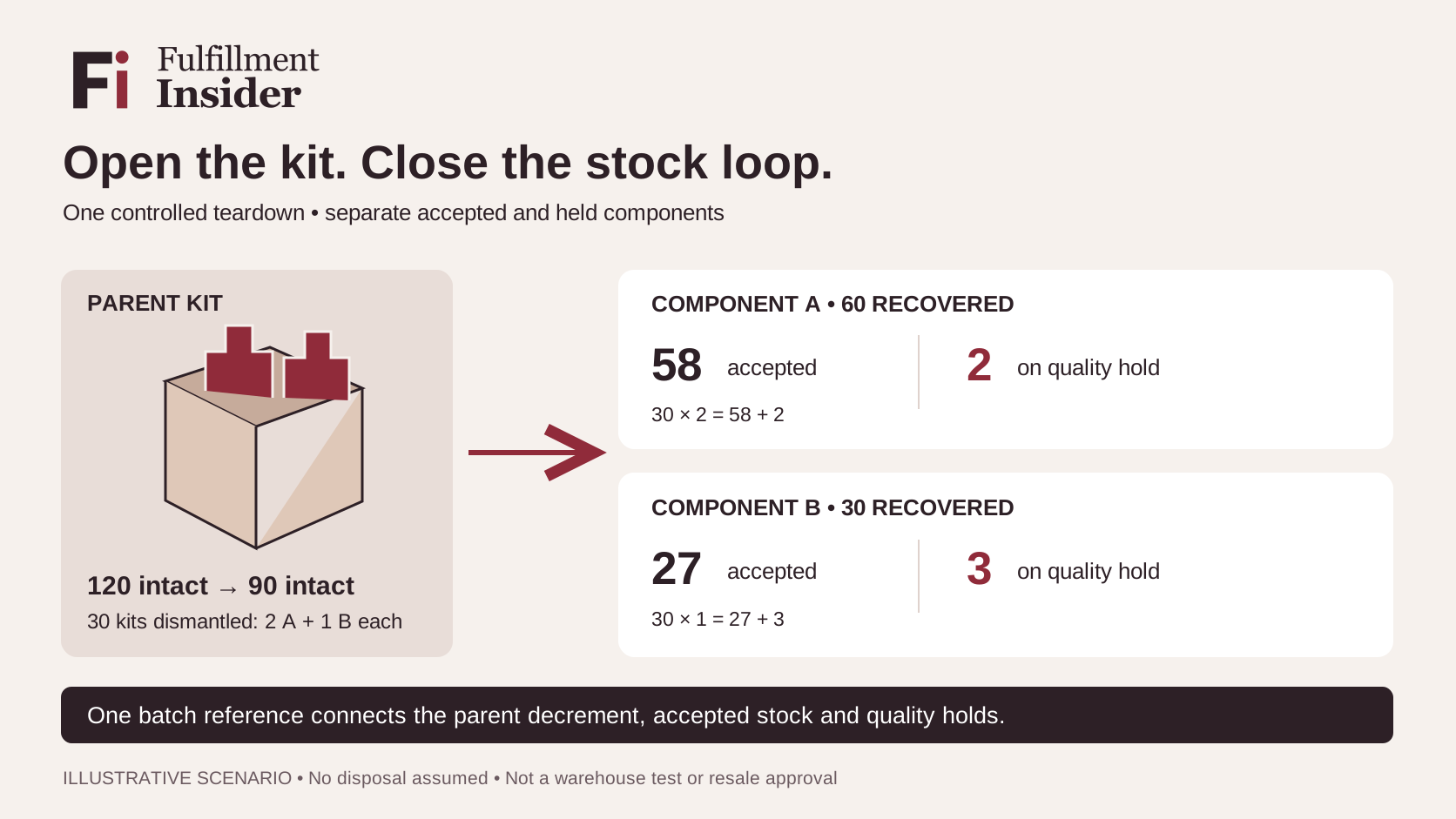 Field notes / October 29, 2026
Breaking Apart a Gift Kit Needs Its Own Inventory Transaction
Remove dismantled kits from sellable parent stock before releasing recovered components. Reconcile each component separately and hold anything whose condition has not been accepted.
Read the guide →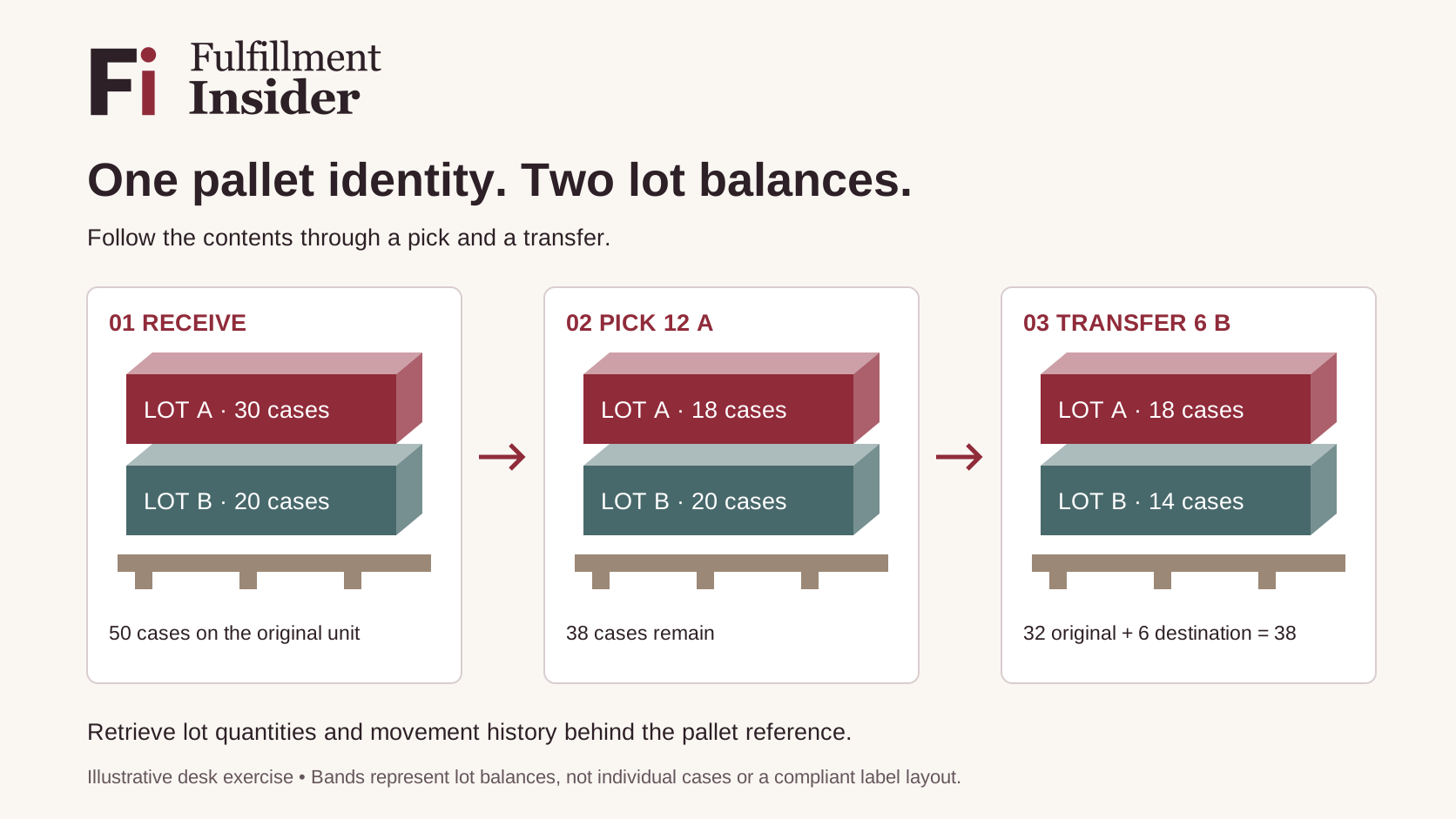 Field notes / October 28, 2026
One Pallet, Two Lots: The SSCC Is Not the Lot Record
A pallet identifier can connect a physical load to its electronic records. It does not remove the need to preserve each lot and its quantity. Test the relationship between the pallet, its contents and subsequent movements.
Read the guide →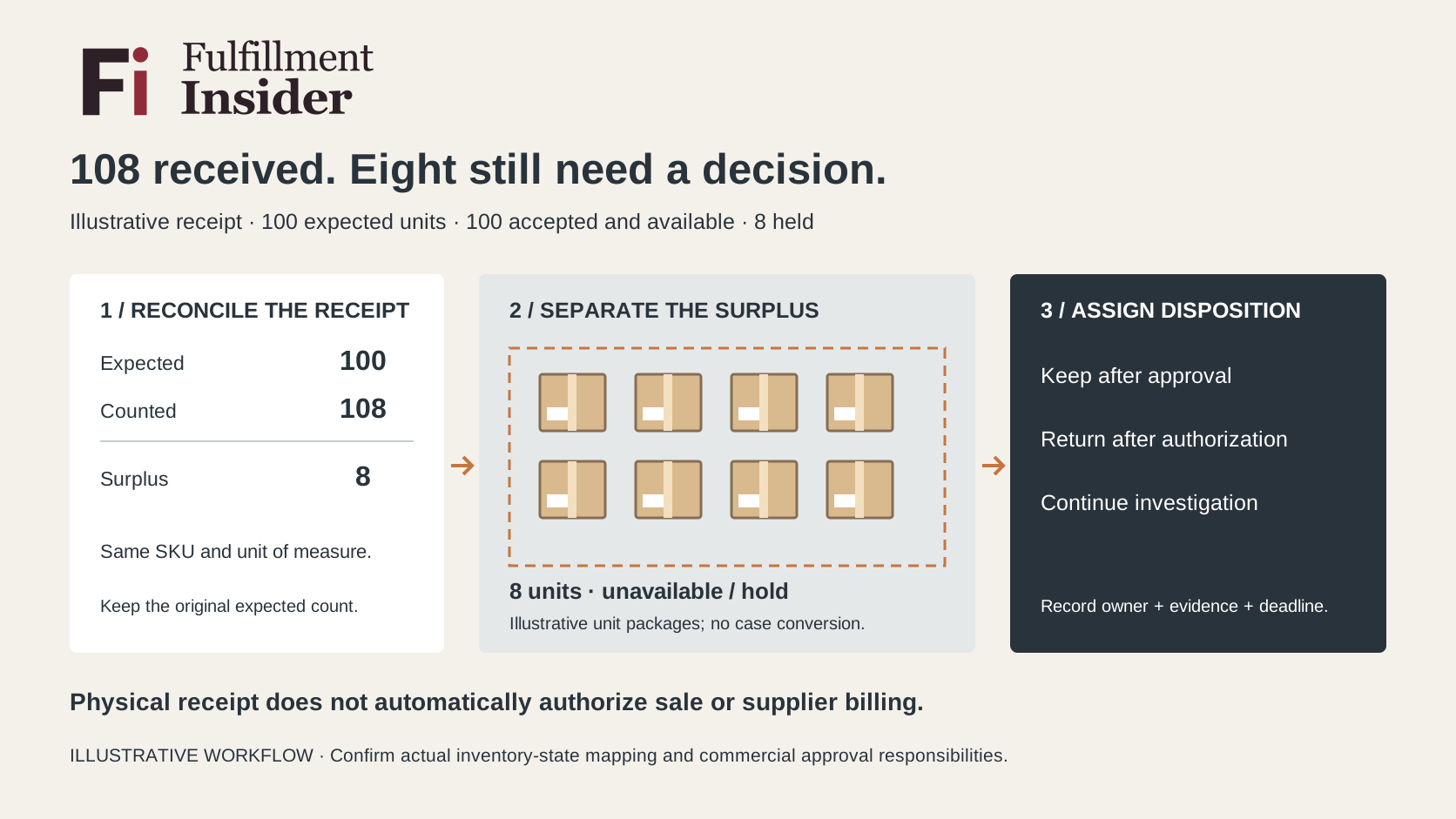 Field notes / October 27, 2026
Your 3PL Received Eight Extra Units. Who Decides What Happens Next?
Separate physical receipt, sale availability and commercial approval when inbound quantities exceed the purchase order.
Read the guide →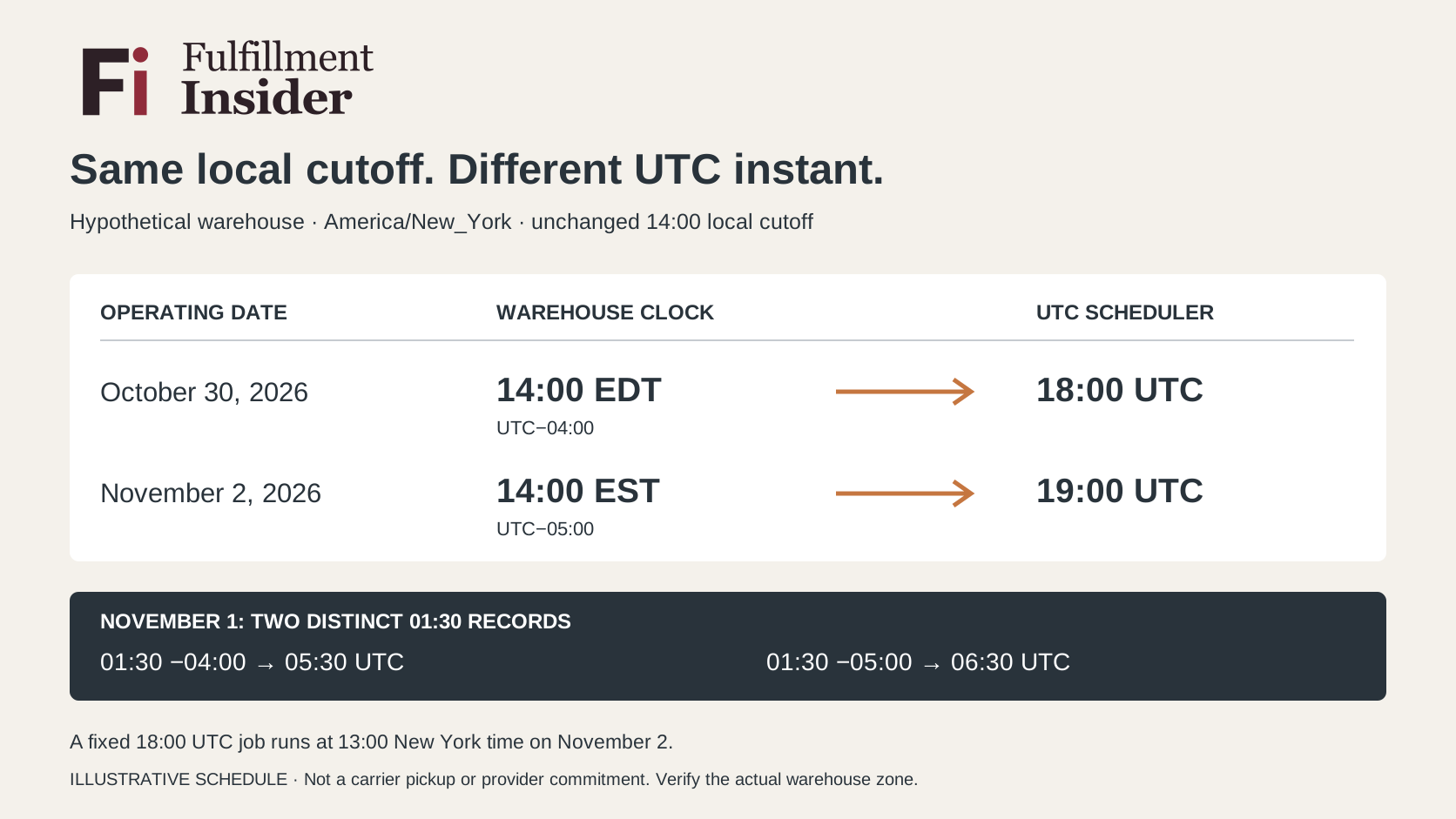 Field notes / October 26, 2026
Before November 1, Check Which Clock Controls Your Fulfillment Cutoff
Test local warehouse cutoffs and repeated-hour records before the clock change. A fixed UTC schedule and a fixed local cutoff do not stay aligned automatically.
Read the guide →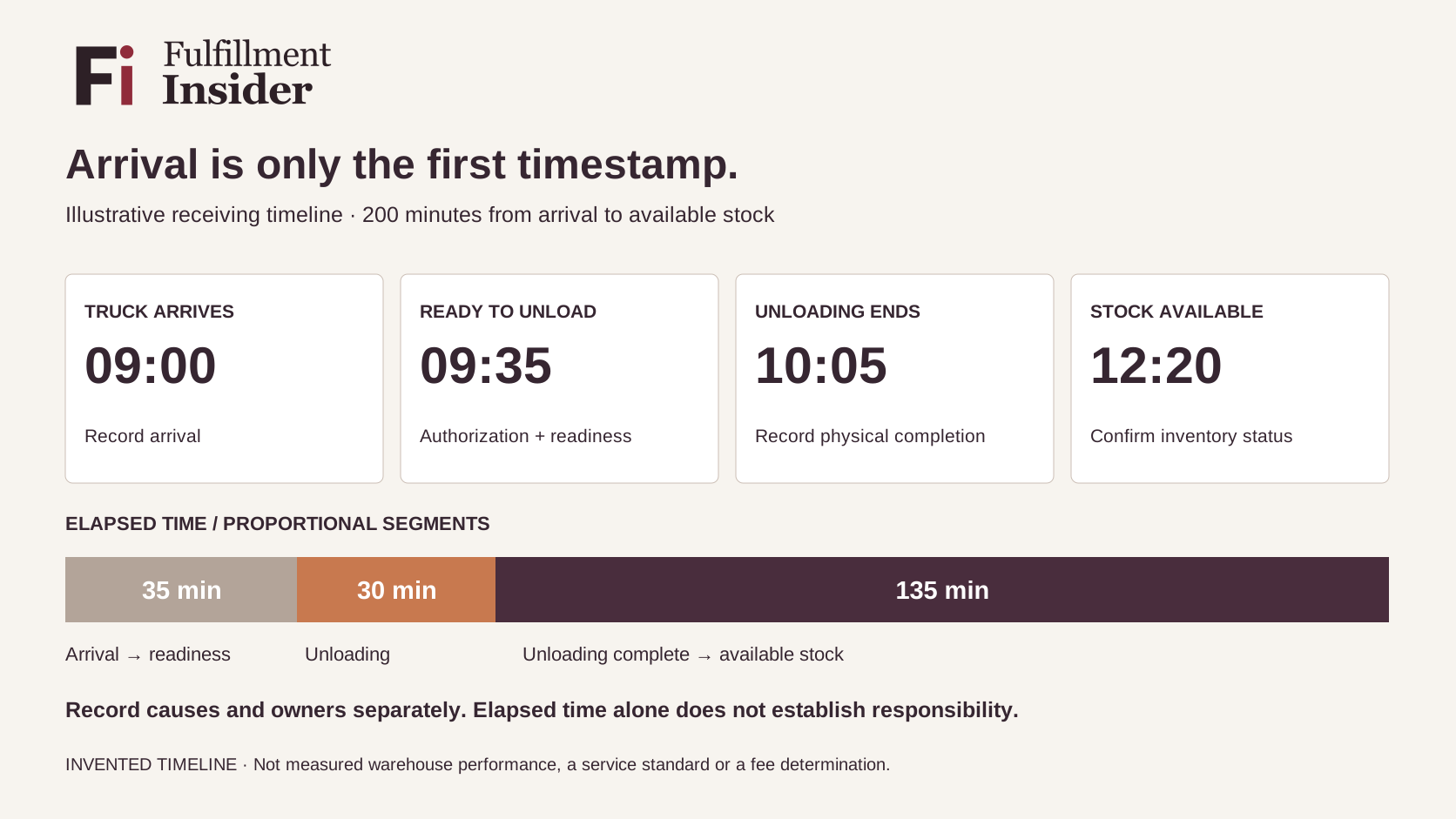 Field notes / October 26, 2026
Book the Receiving Appointment Around Readiness, Not Just Arrival
Separate truck arrival, readiness to unload, unloading and inventory availability. A booked slot is useful only when the load information, space and operating team are ready.
Read the guide →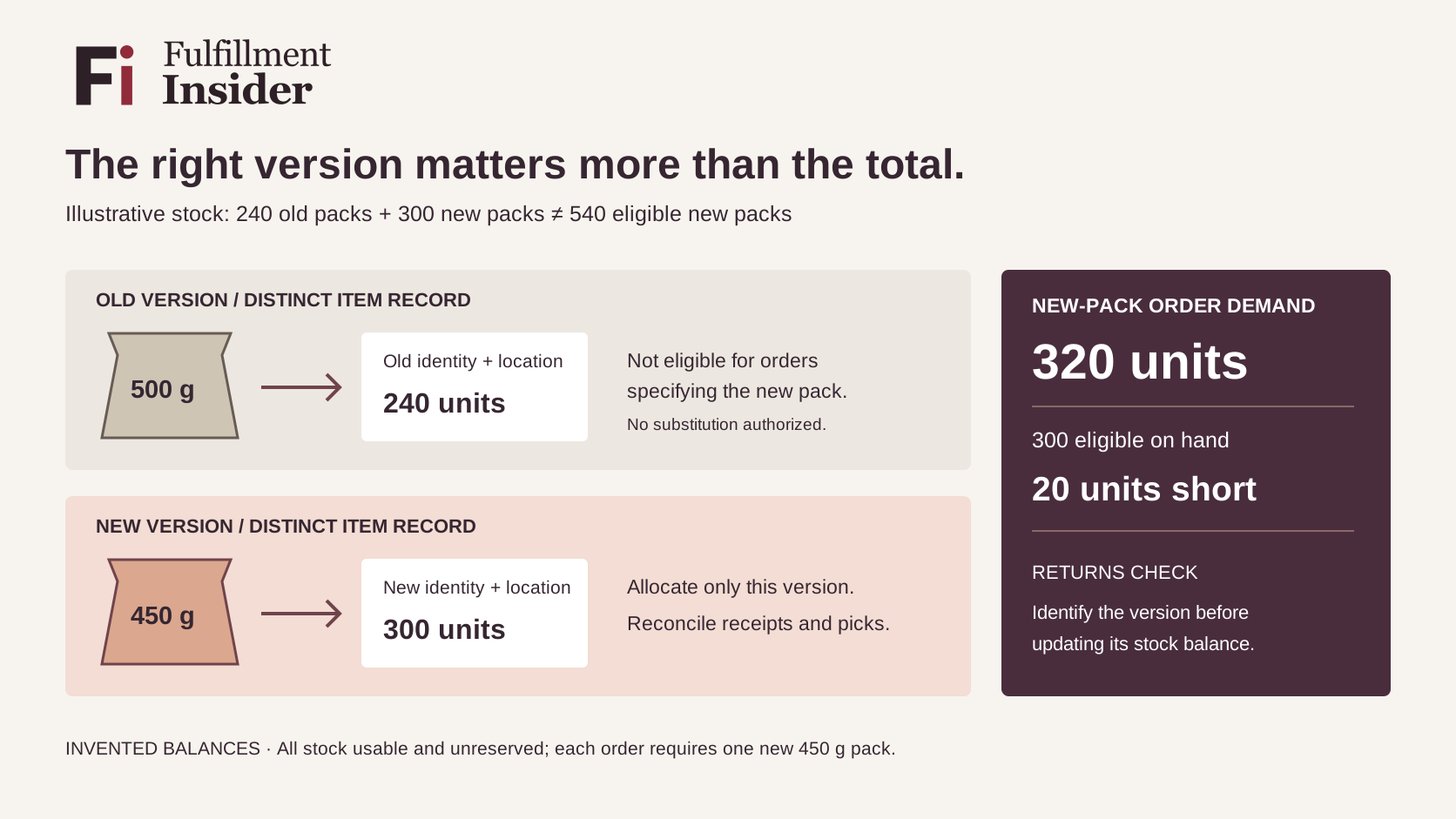 Field notes / October 26, 2026
A Smaller Pack Needs a Separate Warehouse Changeover
Keep old and new pack identities distinct through receiving, allocation and returns. A combined unit balance can hide a shortage of the version the customer ordered.
Read the guide →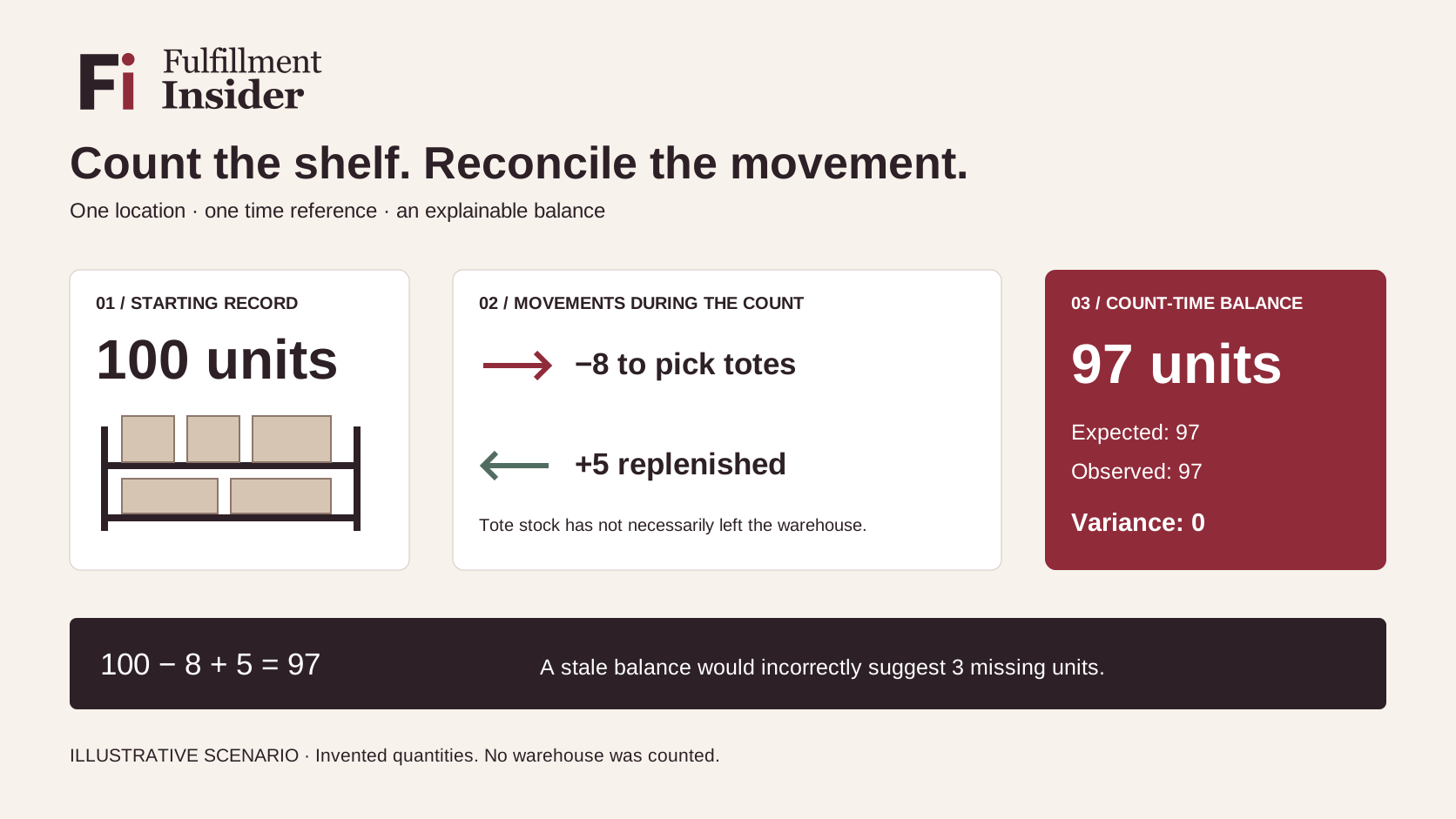 Field notes / October 25, 2026
Count the Location Without Losing the Units in Motion
A stock count needs a defined location boundary and time reference. Reconcile picks and replenishment in motion before turning a shelf difference into an inventory adjustment.
Read the guide →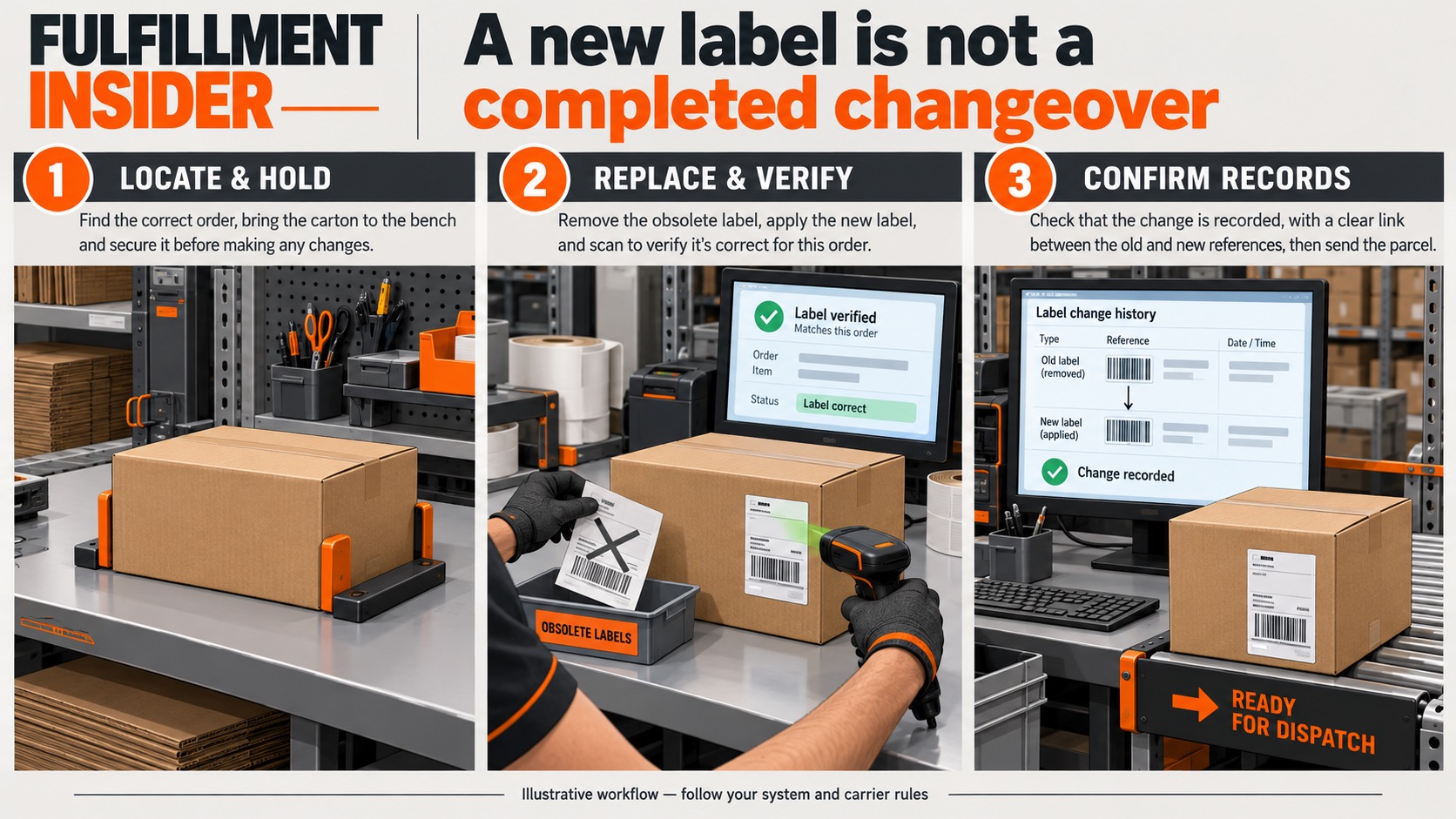 Field notes / October 25, 2026
A Replacement Shipping Label Needs a Physical Changeover
Changing the digital label is only part of the job. Match the parcel, retire the old label and confirm which tracking reference should leave the building.
Read the guide →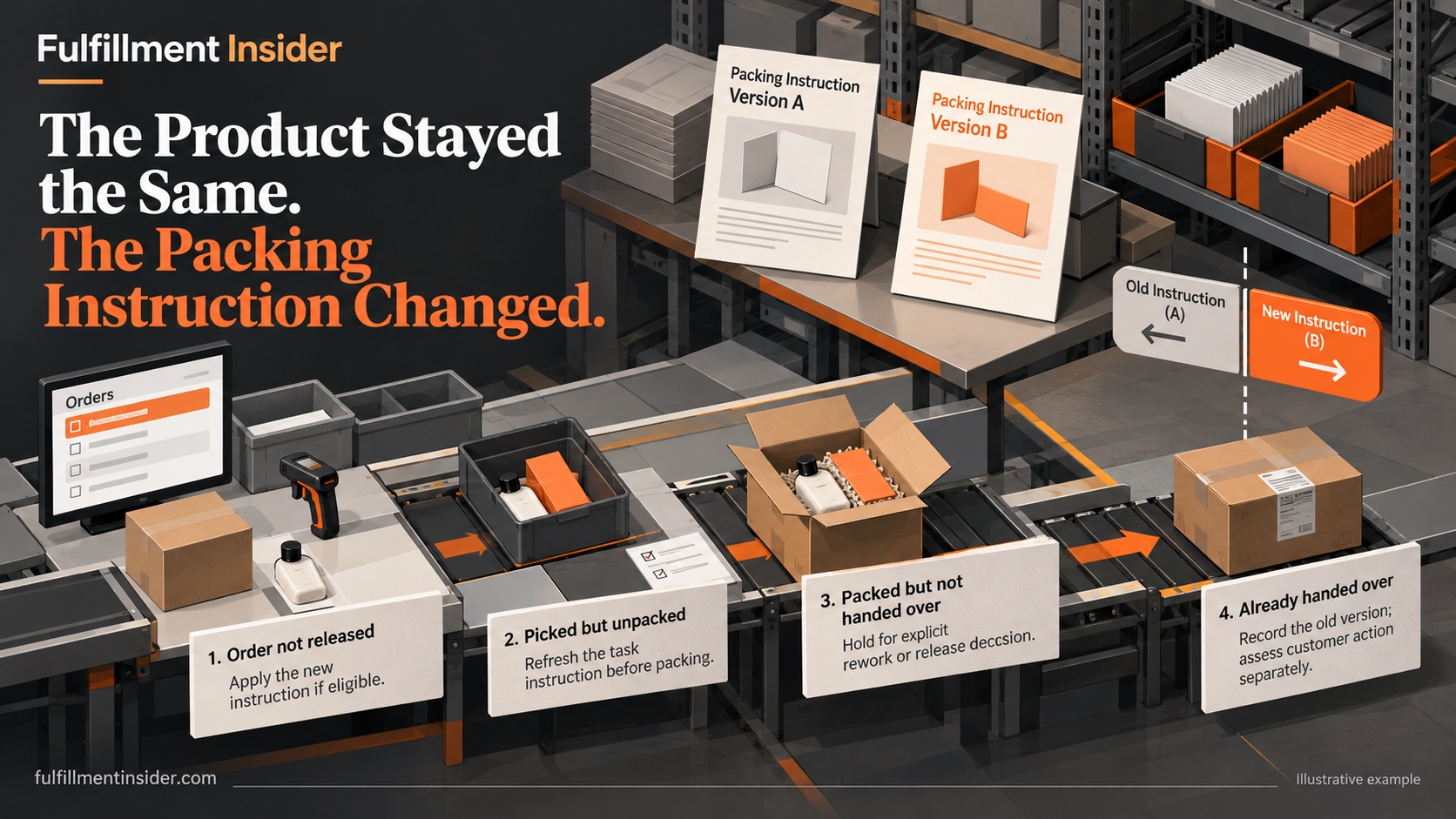 Field notes / October 23, 2026
The Product Stayed the Same. The Packing Instruction Changed.
A packing change needs a version, an effective order boundary and a plan for work already in progress. Replacing a PDF is only the first step.
Read the guide →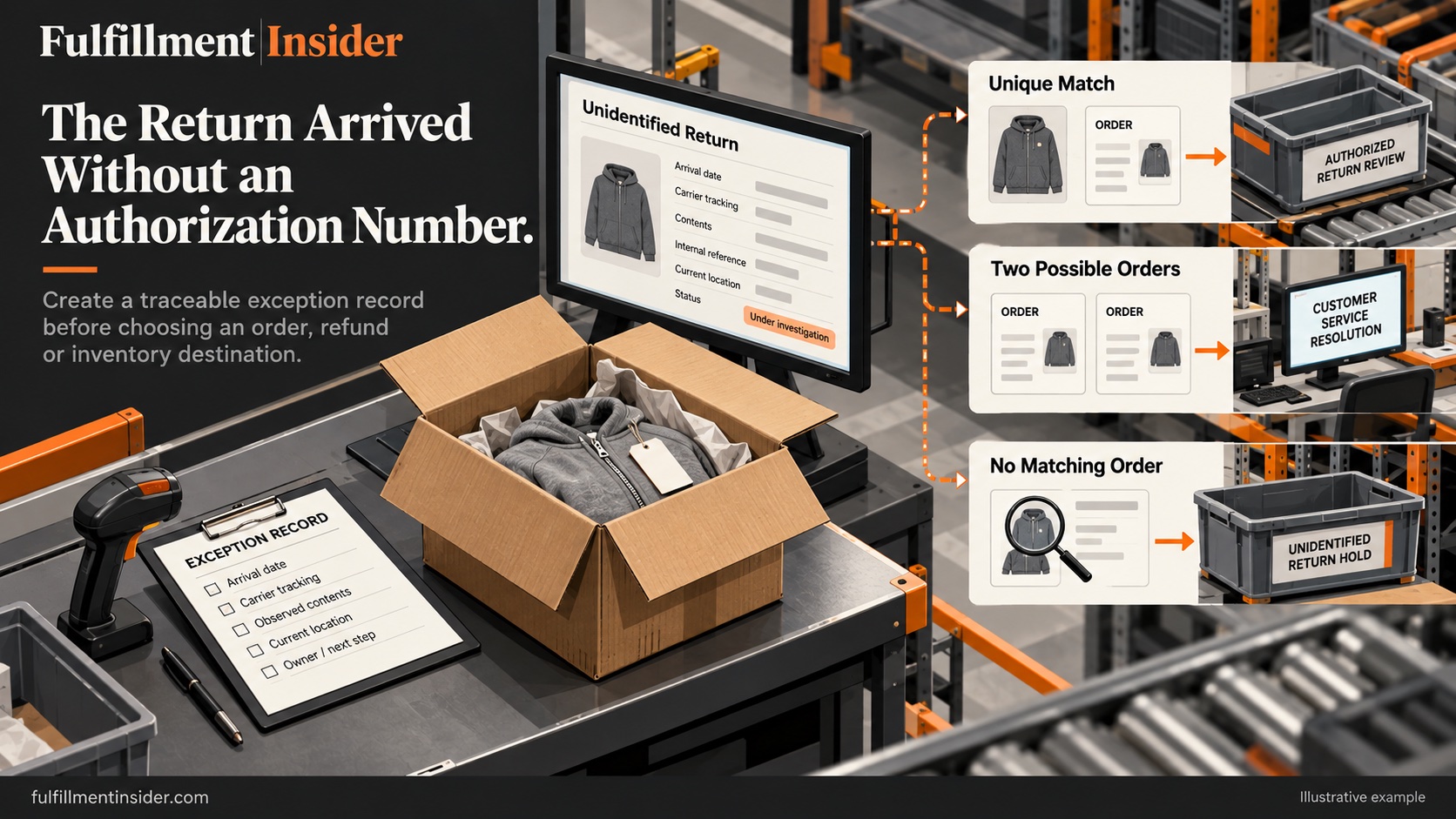 Field notes / October 23, 2026
The Return Arrived Without an Authorization Number
Give unidentified return parcels a traceable exception record before choosing an order, refund or inventory destination. A recognizable product does not establish which customer sent it.
Read the guide →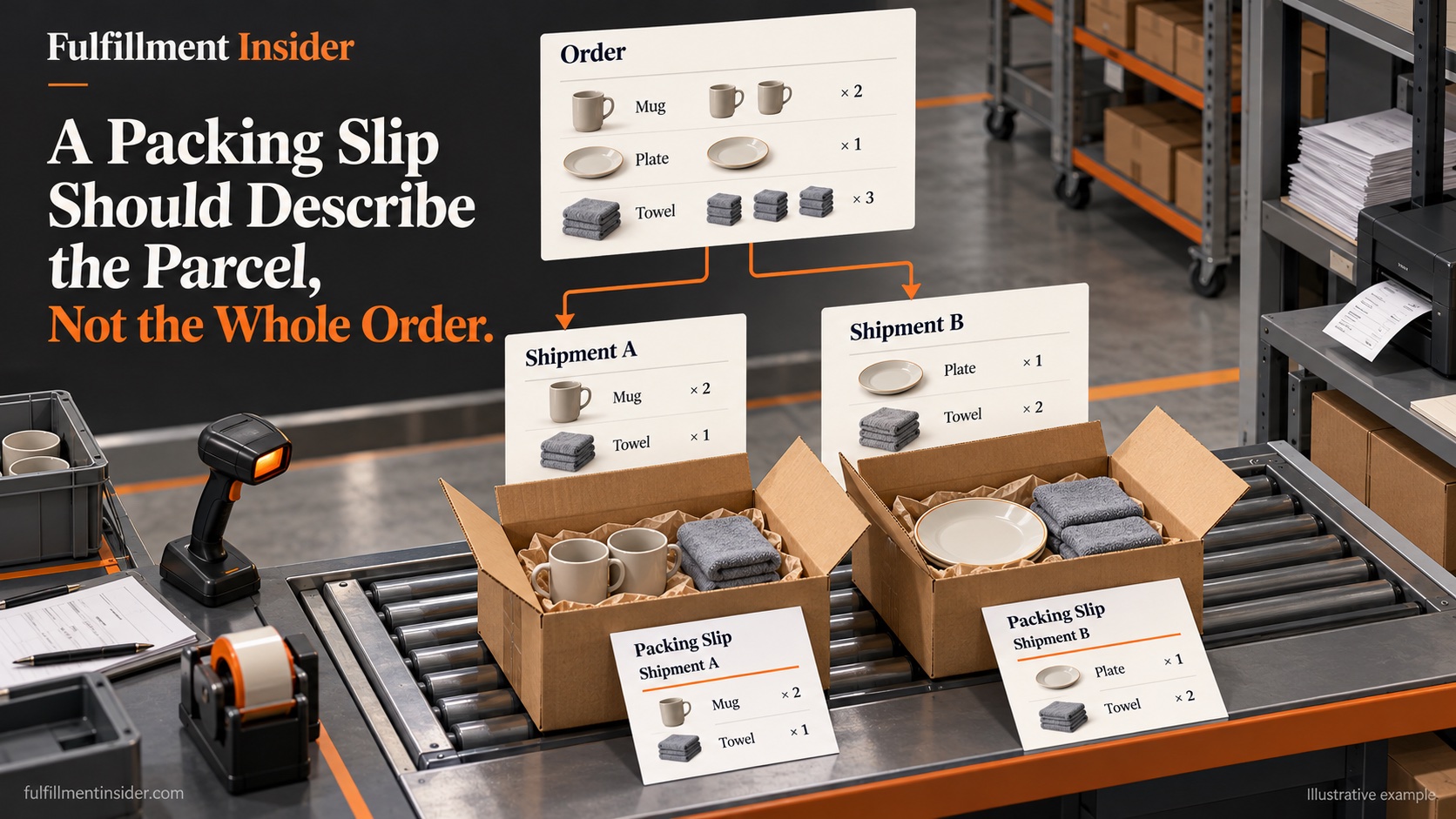 Field notes / October 22, 2026
A Packing Slip Should Describe the Parcel, Not the Whole Order
Generate and verify documents against the shipment being packed. An order-level list can confuse customers when some items leave later or from another location.
Read the guide → Field notes / October 22, 2026
Return to Sender Is Its Own Warehouse Workflow
Link returned parcels to the original shipment, inspect condition and assign a customer-resolution decision before making stock sellable or sending it again.
Read the guide →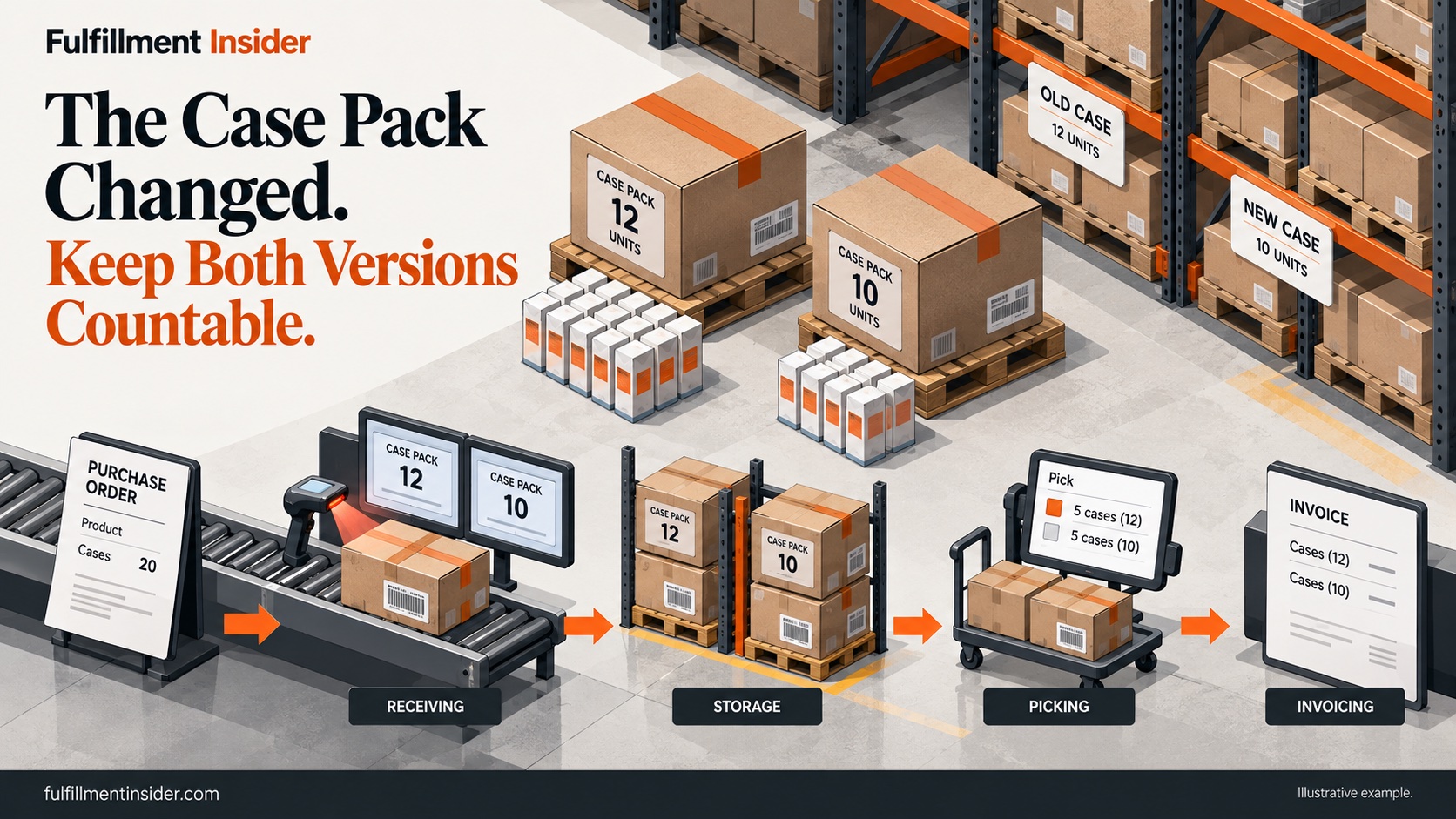 Field notes / October 20, 2026
The Case Pack Changed. Keep Both Versions Countable.
When a case quantity changes, preserve each version’s identity and unit conversion until old stock is exhausted and receiving, picking and invoices agree.
Read the guide →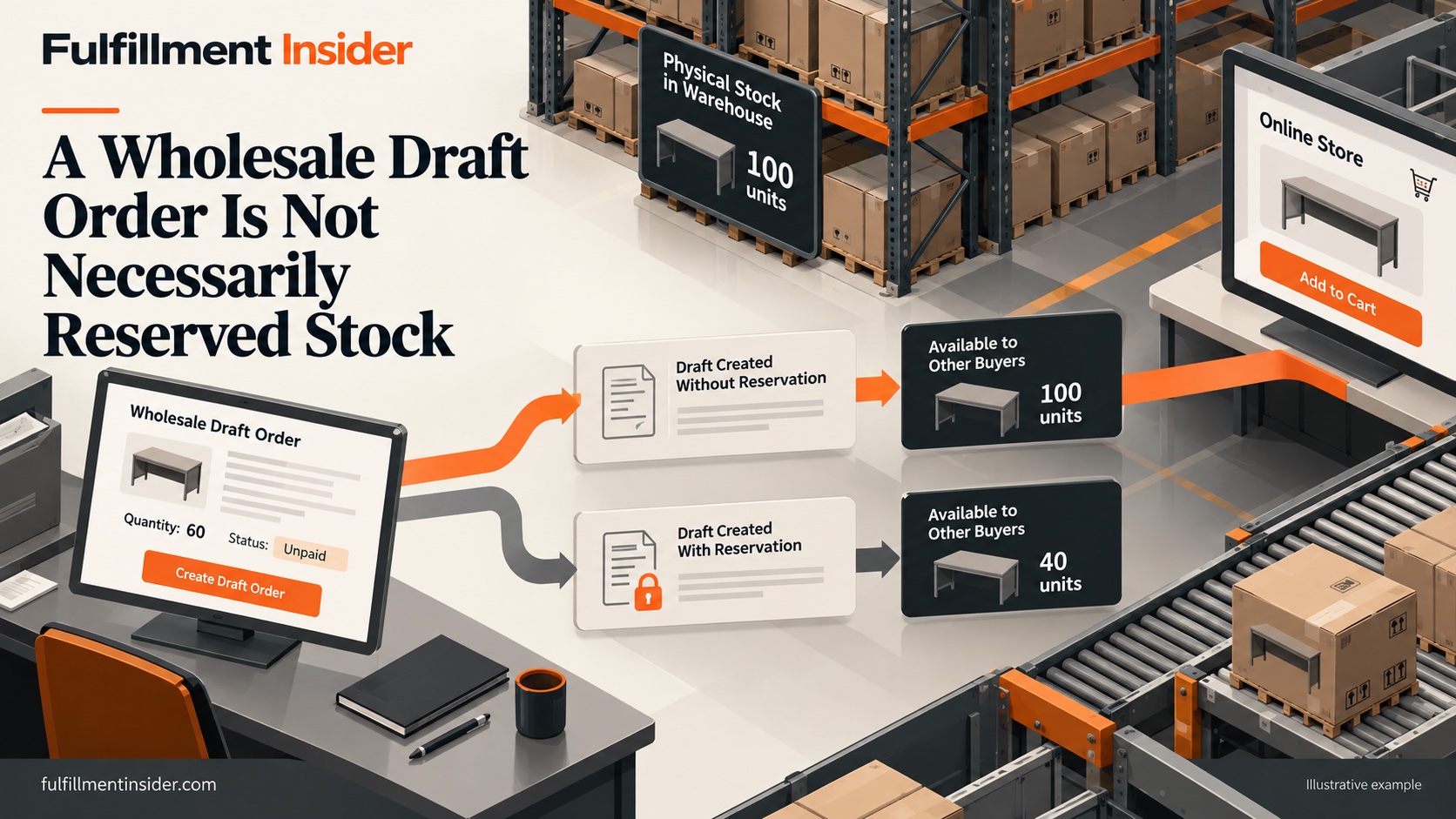 Field notes / October 20, 2026
A Wholesale Draft Order Is Not Necessarily Reserved Stock
An unpaid wholesale draft can leave stock available to other shoppers. Verify the reservation event and its expiry across the storefront and warehouse before promising that stock is held.
Read the guide → Field notes / October 19, 2026
A Free-Gift Promotion Needs One Clear Packing Instruction
Confirm whether a promotion creates a real gift order line or relies on a warehouse rule. Test the handoff before launch so a discount does not become a missing or duplicate item.
Read the guide → Field notes / October 19, 2026
The Carton Count Matches. Does the Size Mix?
Reconcile the contents by variant as well as the total. A correct carton or unit count can hide a shortage in one size and an excess in another.
Read the guide →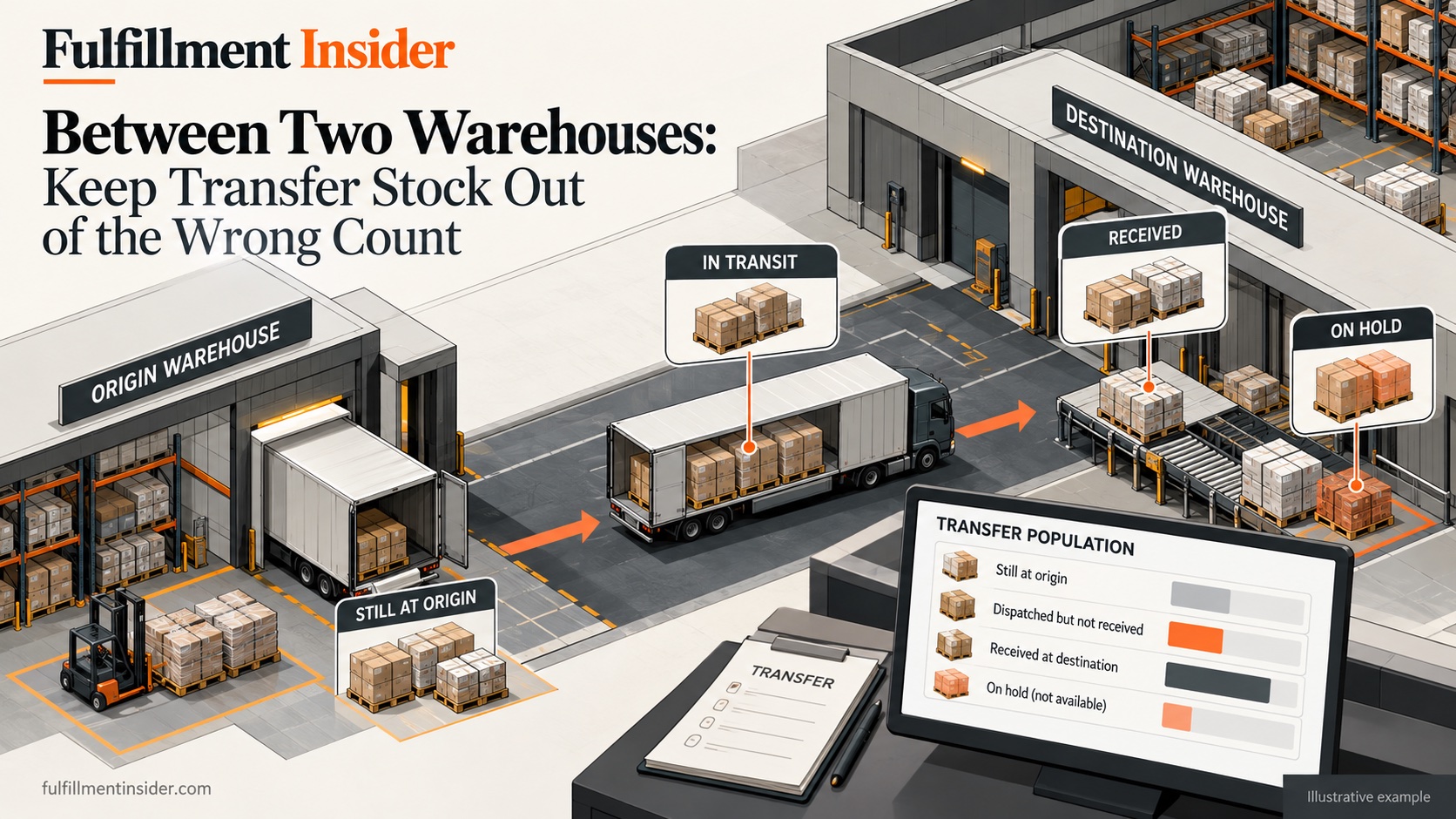 Field notes / October 18, 2026
Between Two Warehouses: Keep Transfer Stock Out of the Wrong Count
Reconcile the transfer population across origin, transit and destination. Record physical receipt separately from eligibility to sell; do not close the movement just because a truck arrived.
Read the guide →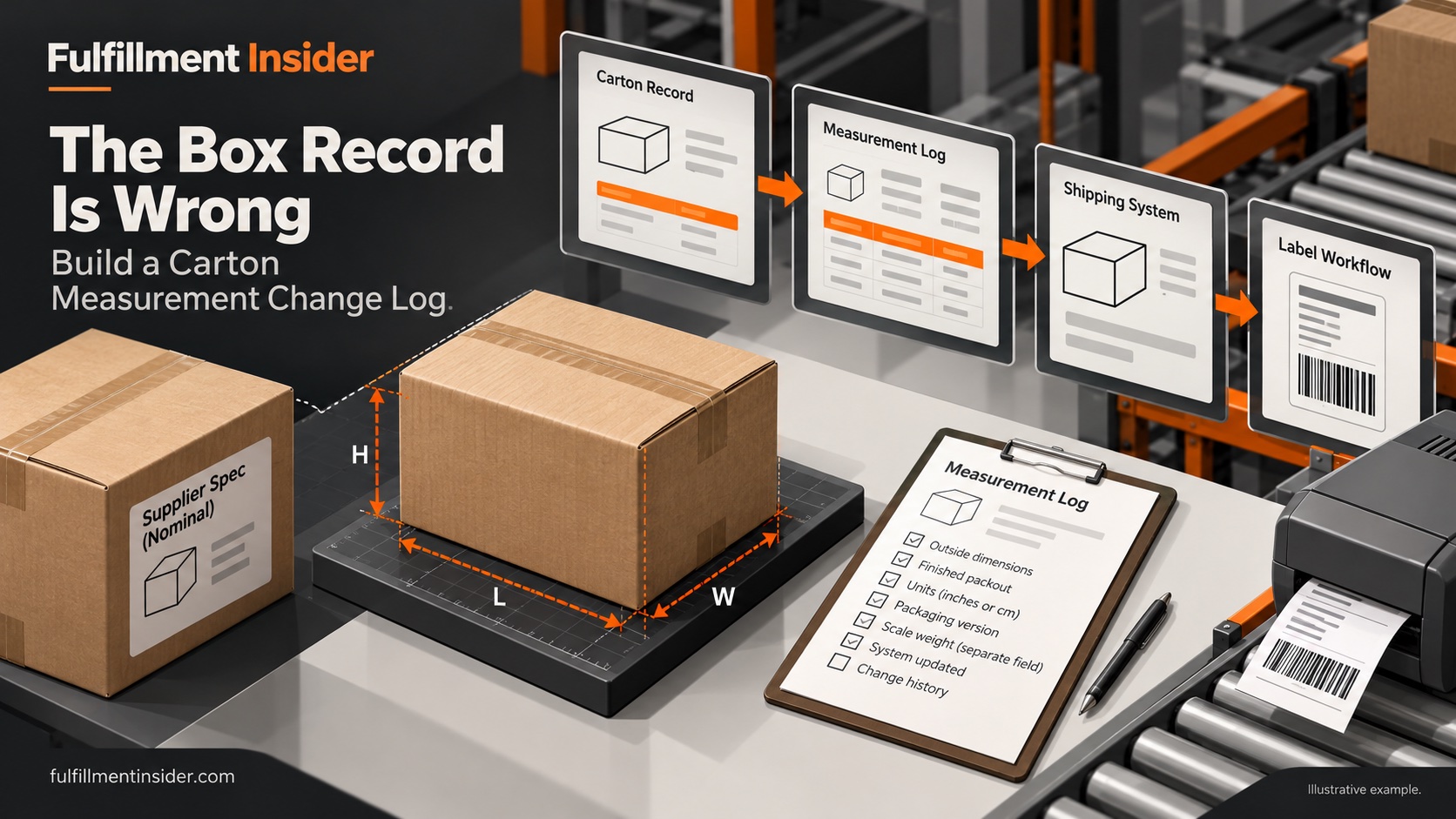 Field notes / October 17, 2026
The Box Record Is Wrong: Build a Carton Measurement Change Log
Measure the finished outer package and trace where its dimensions enter shipping systems. A supplier’s nominal box size and an old saved package record are not substitutes for the current packed measurement.
Read the guide → Field notes / October 15, 2026
A retail shipment changes at the dock. Did its advance notice change too?
Reconcile the final loaded units and their contents with the advance shipping notice. A message accepted by a system can still describe a plan that changed before dispatch.
Read the guide →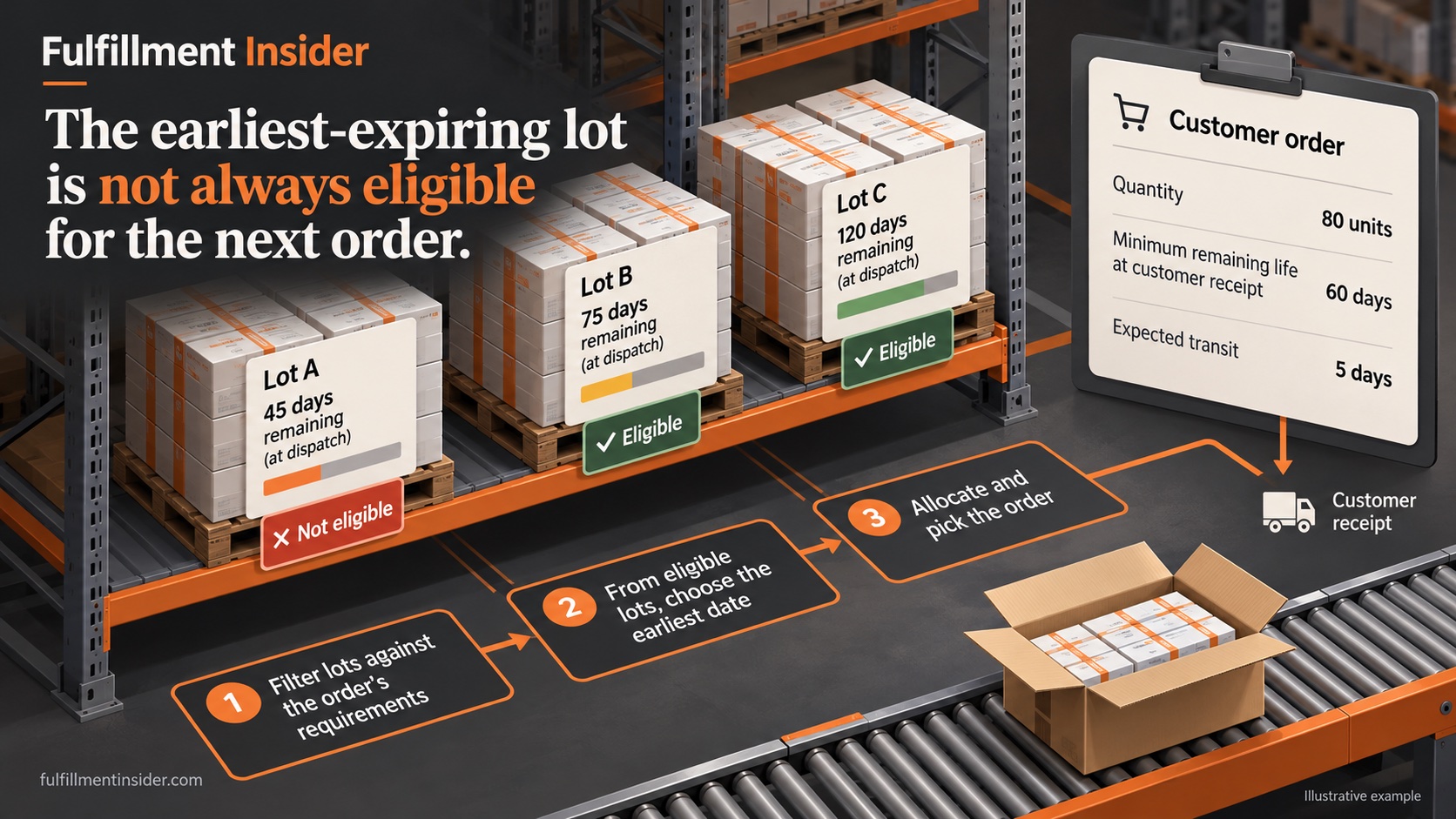 Field notes / October 15, 2026
The earliest-expiring lot is not always eligible for the next order
Filter lots against the order’s requirements before choosing the earliest eligible date. A warehouse can rotate stock correctly and still ship a lot that arrives with too little remaining shelf life for that customer.
Read the guide →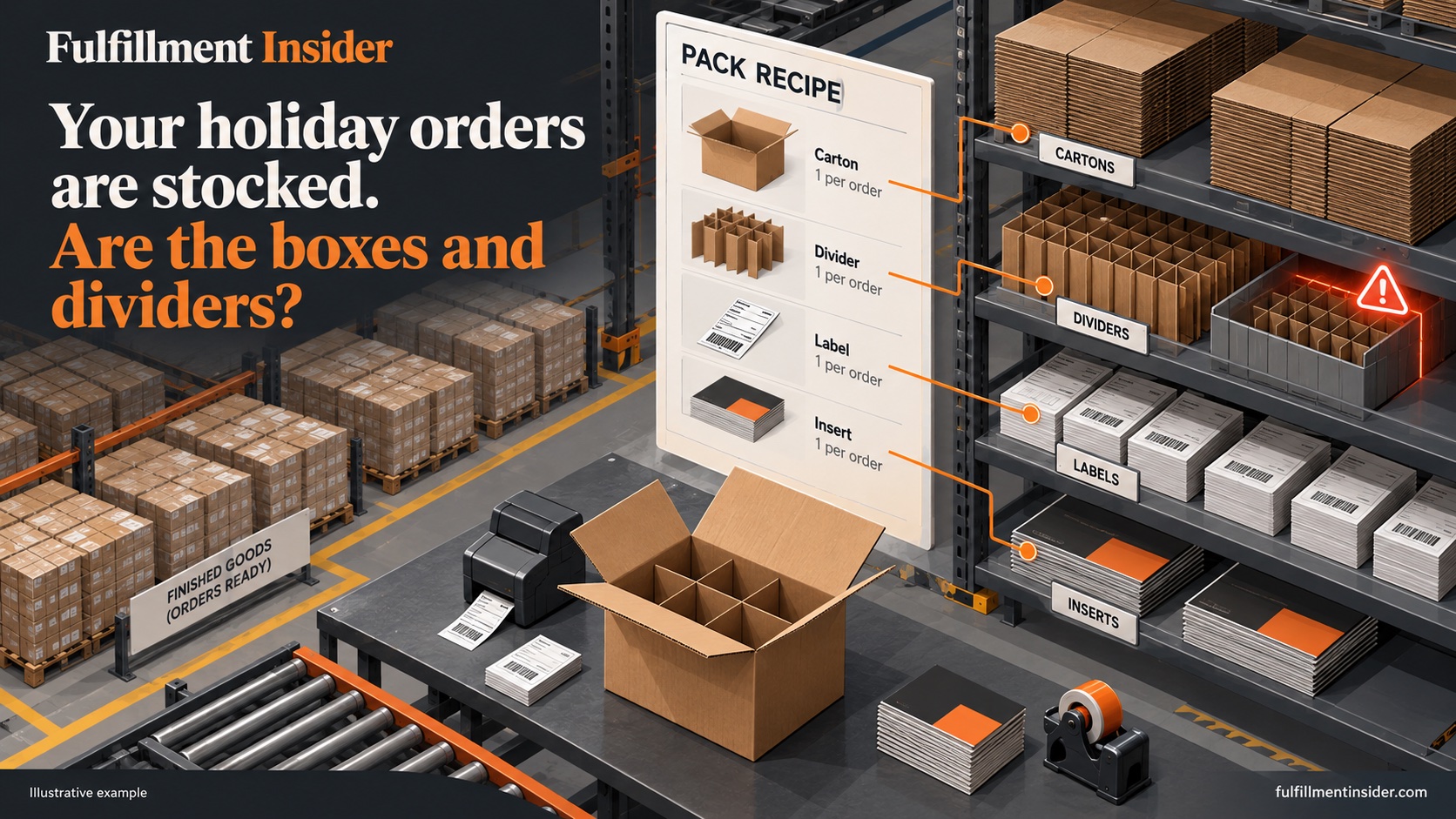 Field notes / October 15, 2026
Your holiday orders are stocked. Are the boxes and dividers?
Track packaging against the order recipe and replenishment lead time. Count only usable, unreserved supplies; the material with the shortest runway can limit what the warehouse ships.
Read the guide → Field notes / October 02, 2026
Your apparel stock is in the building. Can the pick team reach it?
Check each variant at the pick location and count only replenishment that can finish before the deadline. Total building inventory can conceal a shortage.
Read the guide → Field notes / October 01, 2026
Prepare your shipping workflow for FedEx 2027 paper fees
Map manual shipping exceptions now so electronic paperwork failures have an owner before FedEx’s announced 2027 paper fees begin.
Read the guide → Field notes / September 30, 2026
A partial receipt needs a remaining-quantity decision
Reconcile accepted, rejected and still-expected units separately before closing a purchase-order receipt.
Read the guide →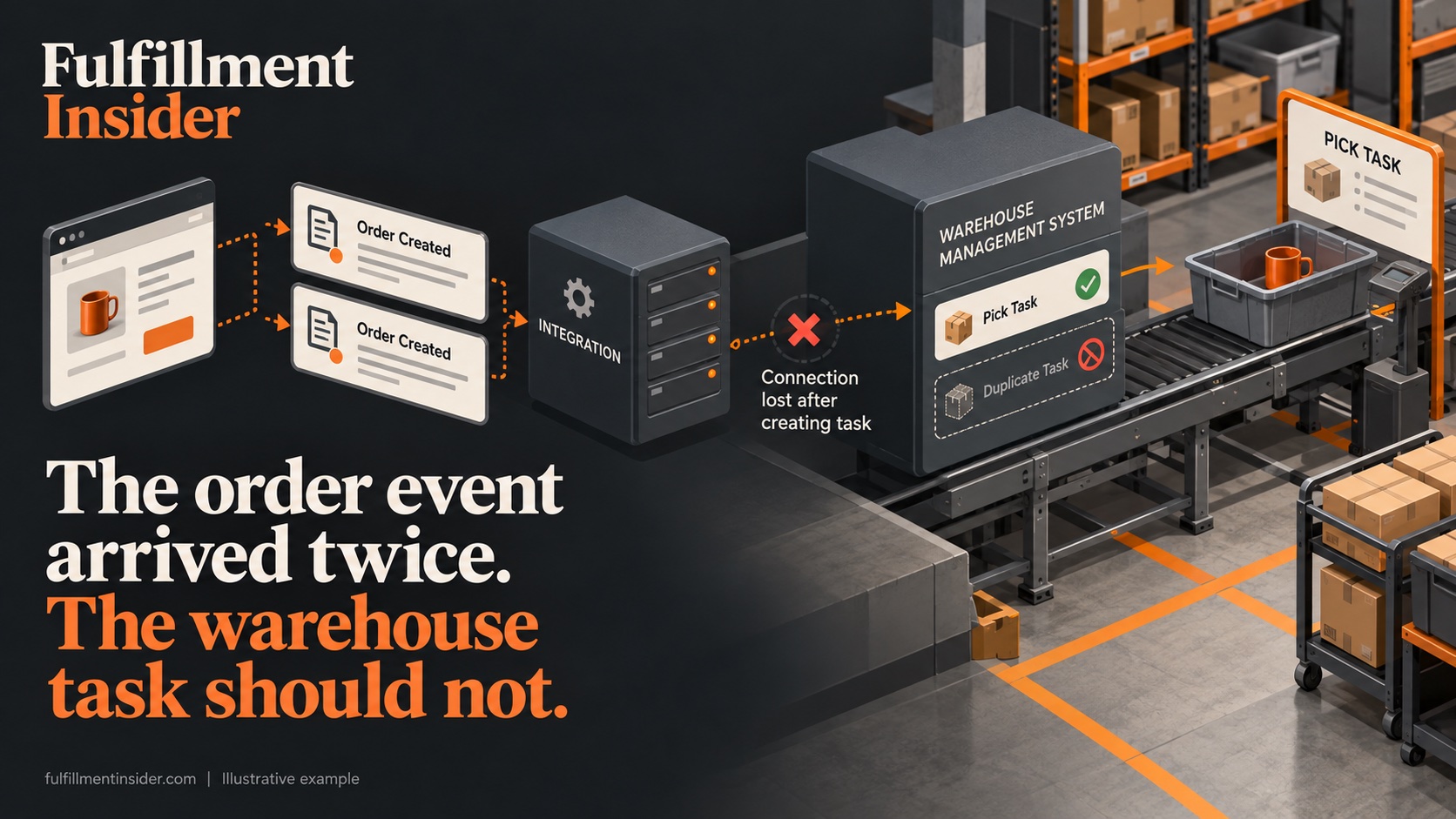 Field notes / September 29, 2026
The order event arrived twice. The warehouse task should not.
A repeated order notification should not create another pick task. Request evidence at the warehouse-action level, including what happens when the first action succeeds but its acknowledgement is lost.
Read the guide →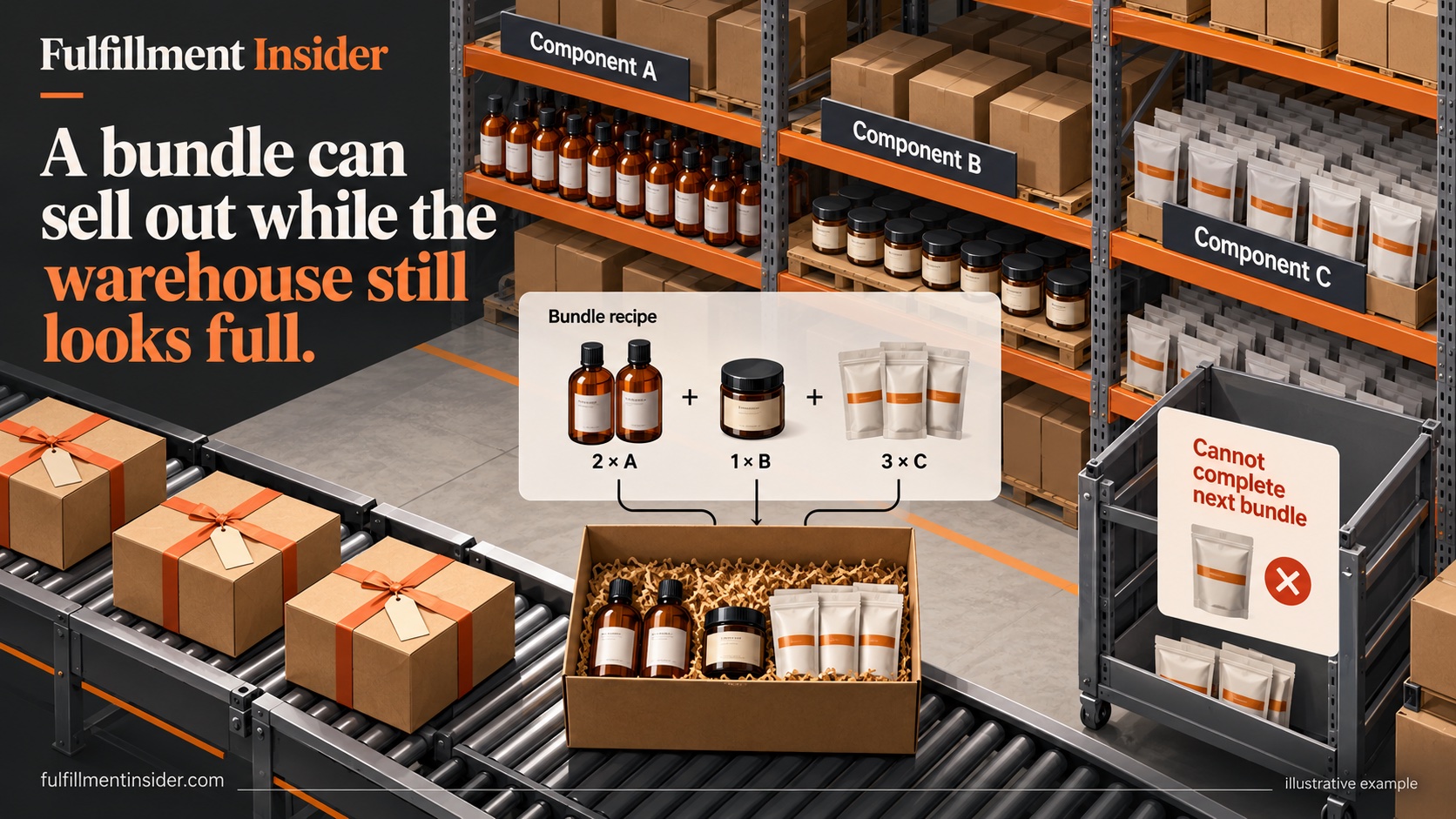 Field notes / September 25, 2026
A bundle can sell out while the warehouse still looks full
Check bundle availability against the quantity needed of each component. Plenty of total stock can hide a shortage of the one item every kit needs.
Read the guide → SpeedX / September 23, 2026
SpeedX rates, fuel surcharges and 12,000+ ZIP coverage: check the handoff
SpeedX serves 12,000+ U.S. ZIP codes. Its 2026 agreement makes rates and fuel tables quote-specific. Check holiday fees, pickup costs and warehouse handoffs.
Read the brief → Carrier cost brief / September 22, 2026
FedEx peak fees start at the packing bench: audit the carton before the rush
Use FedEx's holiday demand schedule to prioritize a packout audit. Check real carton dimensions, substitutions, shipment data, and invoice exceptions.
Read the brief → Inside the operation / 01
A short inbound shipment: trace the discrepancy before adjusting stock
The supplier says it shipped 600 units. The warehouse shows 540. Before anyone adjusts the stock, check what each side counted—and whether the remaining cartons have finished receiving.
Read the guide →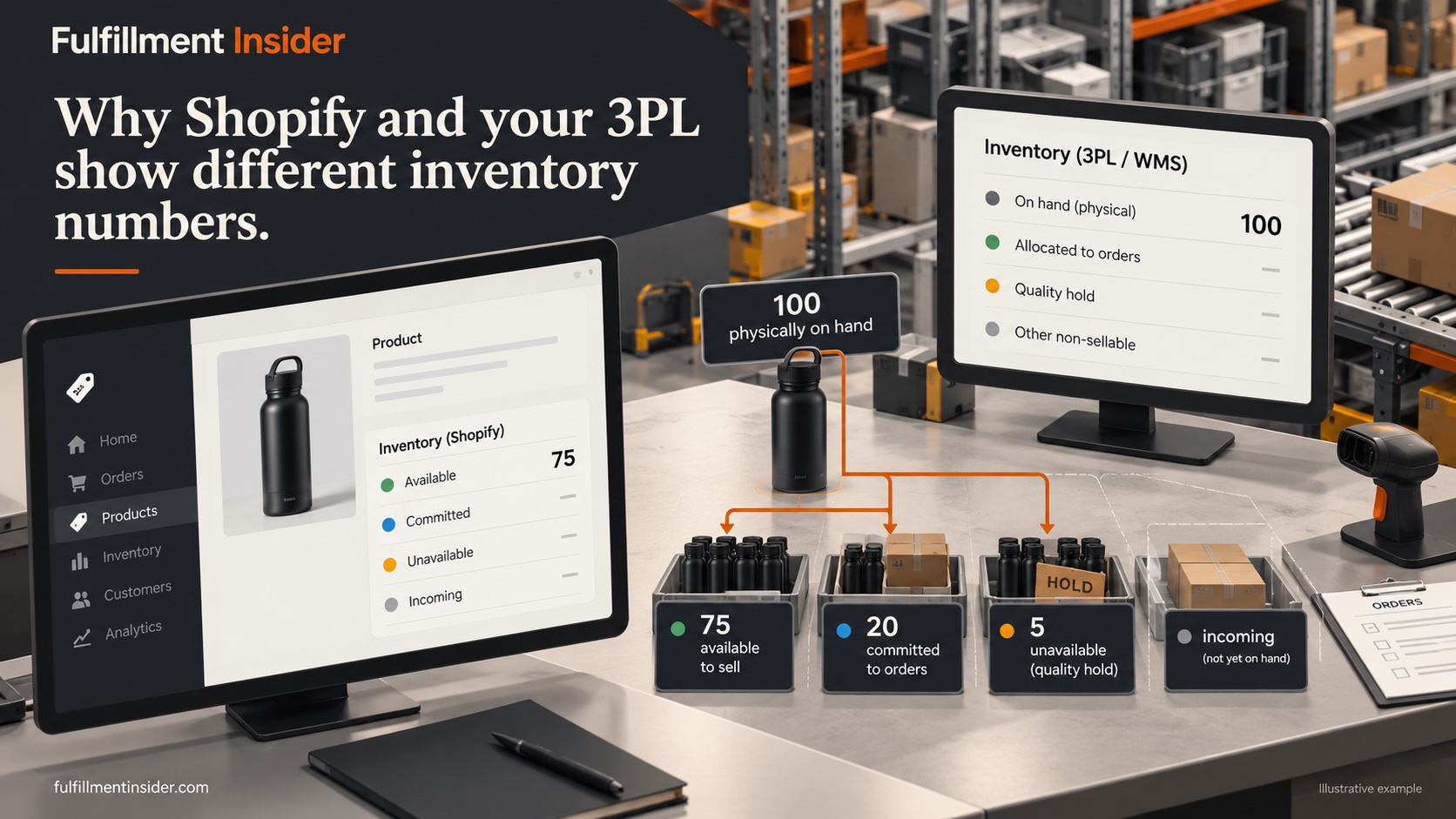 Inside the operation / 02
Why Shopify and your 3PL show different inventory numbers
Shopify says 75. The warehouse says 100. Both numbers might be correct. Start by checking whether you are comparing sellable stock with everything physically on hand.
Read the guide →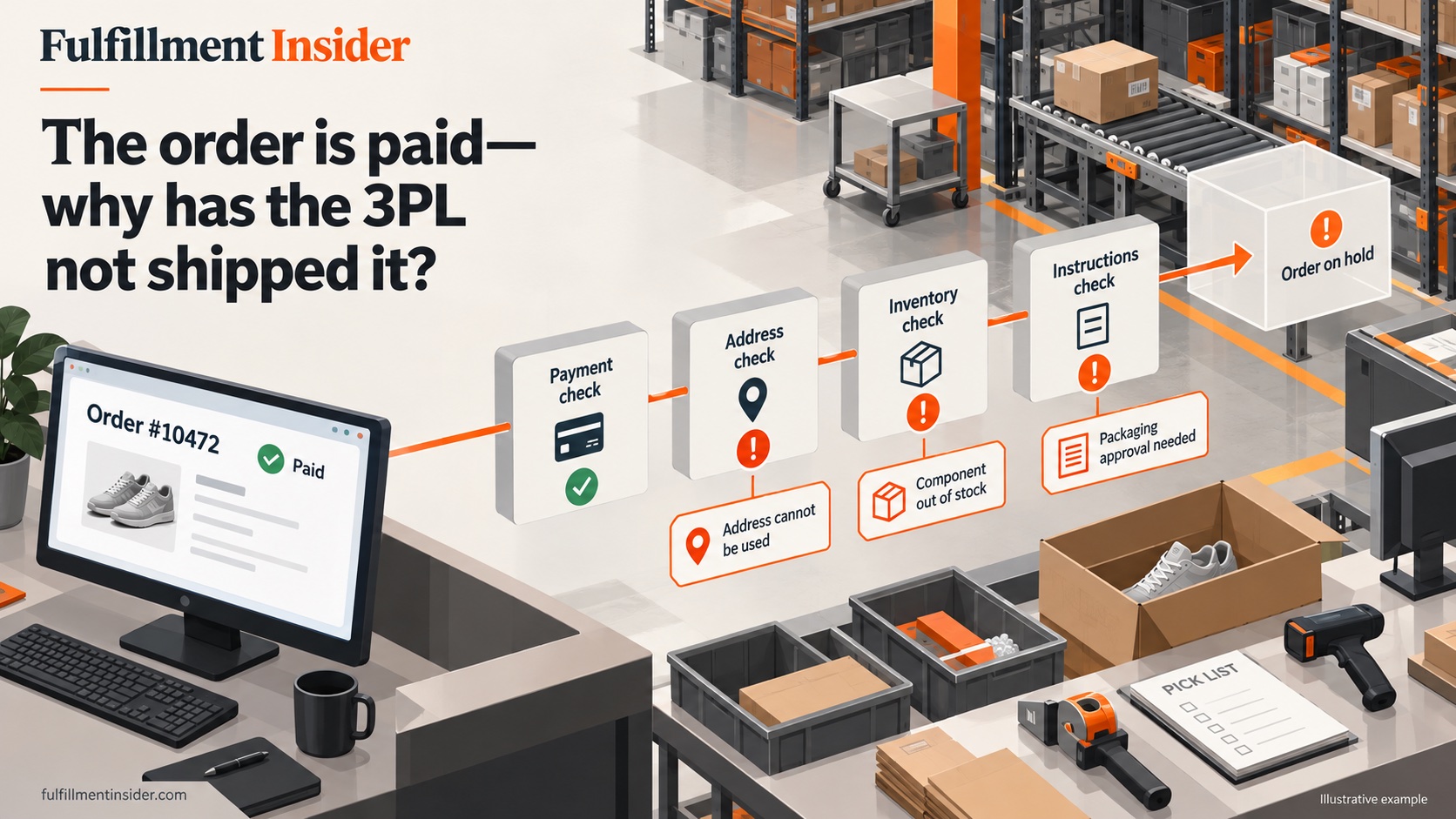 Inside the operation / 03
The order is paid—why has the 3PL not shipped it?
The customer paid. The order is sitting still. Follow the release checks before assuming the warehouse missed it: payment, address, inventory, and instructions can each stop the next step.
Read the guide → Inside the operation / 04
Inside a beauty brand’s pick-and-pack workflow
Follow a hypothetical beauty order from incoming stock to a packed parcel. The useful questions live in the handoffs between people, products, and systems.
Read the guide → Inside the operation / 05
Choosing a 3PL: follow the order, not the pitch
A fulfillment operation reveals itself in its handoffs. To understand a prospective 3PL, follow one ordinary order from inventory receipt to carrier collection.
Read the guide → Inside the operation / 06
One warehouse, two workflows: DTC and retail
DTC and retail fulfillment can share a building while following very different paths. The distinction becomes visible at the order-release stage.
Read the guide → Inside the operation / 07
From receiving to returns: how fulfillment works
The fulfillment floor is a sequence of decisions as well as physical movements. Each step needs a signal that tells the next person or system what to do.
Read the guide → Inside the operation / 08
Read fulfillment metrics like an operator
A warehouse metric is only useful when you know how it is produced. Two dashboards can display the same label while counting different events.
Read the guide →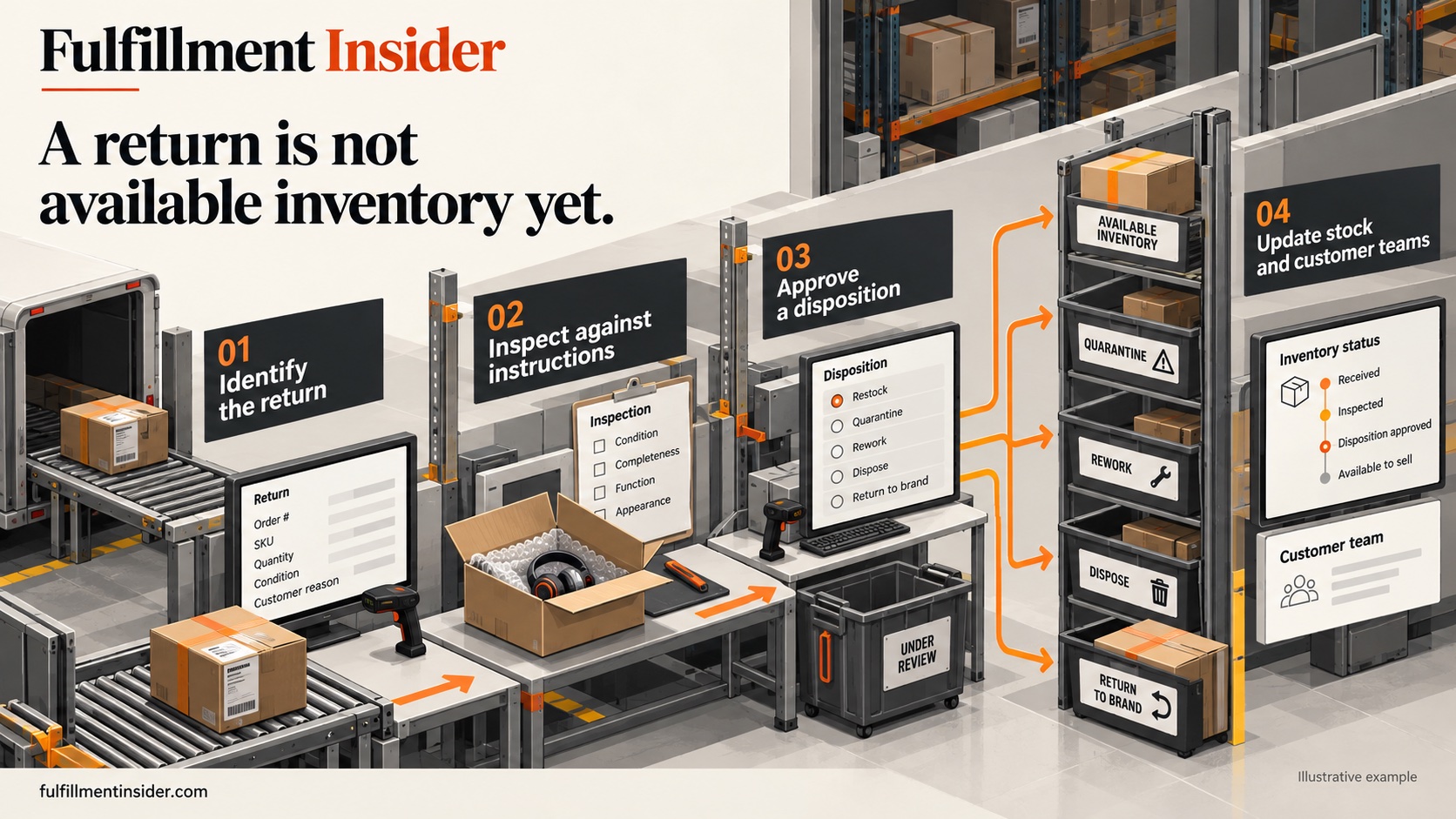 Inside the operation / 09
A return is not available inventory yet
Follow the decisions between a parcel arriving back at the warehouse and a product becoming available to sell again.
Read the guide →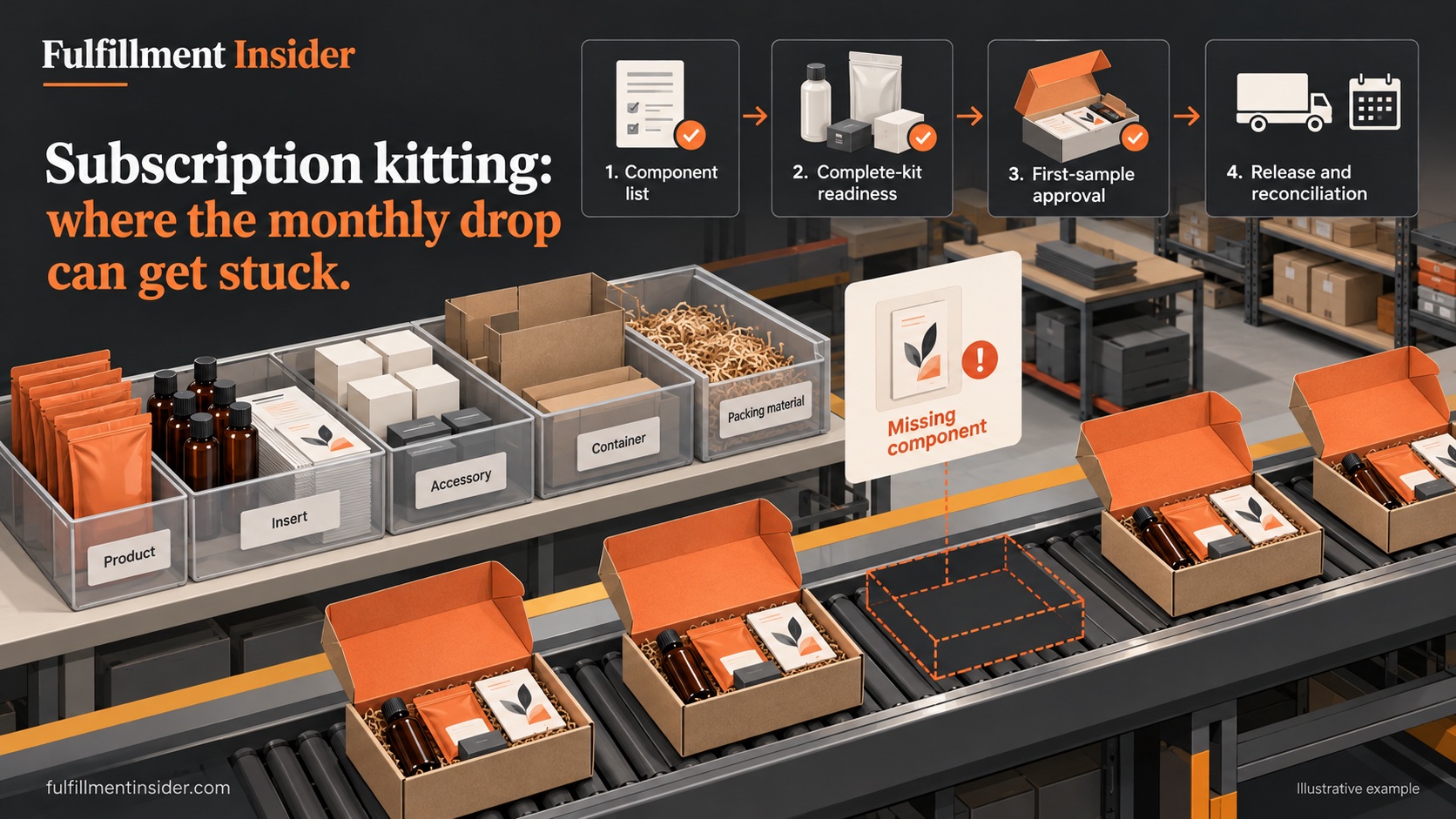 Inside the operation / 10
Subscription kitting: where the monthly drop can get stuck
A recurring shipment is a small production schedule. Map component readiness, kit approval, and release timing before the next subscription run.
Read the guide → Inside the operation / 11
Inside a warehouse cutover: switching 3PLs
The difficult part of a fulfillment migration is often the moment when physical stock and system records disagree. Plan around that gap.
Read the guide → Inside the operation / 12
Inside a 3PL invoice: the work behind the charges
A fulfillment invoice is a record of warehouse activities translated into fees. Understanding those activities makes the pricing conversation more useful.
Read the guide →