
A truck at the gate is not yet a receiving result
An inbound appointment is often discussed as a date and time. For the brand, however, the useful result is stock that can be used. Between those points sit several different activities: checking the load against its booking, preparing an unloading position, unloading safely, and processing the received goods.
Ask a prospective 3PL to define each milestone before comparing receiving performance. Otherwise, one provider may report from arrival while another starts the clock only when the shipment meets its receiving requirements.
Build the appointment packet before the truck leaves
A practical booking packet should identify the purchase order or inbound reference, expected cartons or pallets, unloading format, product handling needs and a contact who can resolve discrepancies. These are proposed operating fields; the exact requirements should come from the selected warehouse.
Agree how changes reach the receiving team. A supplier changing pallet count after the appointment is booked can affect the space and handling plan. A booking acknowledgment should not be treated as unconditional acceptance of any load that arrives under that reference.
Keep safety decisions with the qualified site team. OSHA identifies loading and unloading hazards and calls for procedures appropriate to the materials handled. Commercial urgency is not a reason to override those procedures. OSHA loading and unloading guidance.
Four timestamps explain more than one average
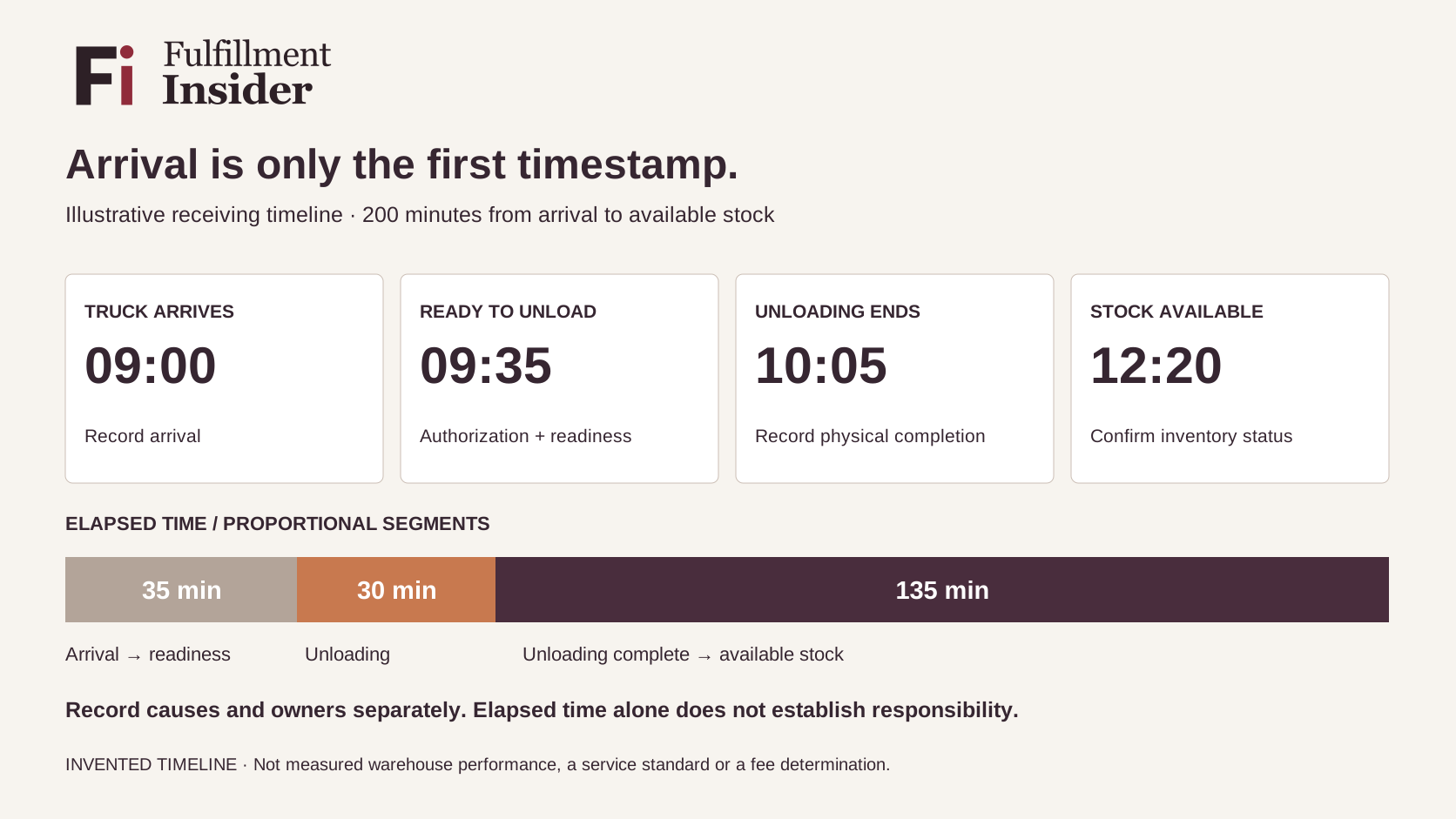
We constructed the following illustrative timeline; it is not a measured warehouse visit or a recommended service standard.
| Milestone | Example time | Interval since previous milestone |
|---|---|---|
| Truck arrives | 09:00 | — |
| Load is ready for authorized unloading | 09:35 | 35 minutes |
| Unloading finishes | 10:05 | 30 minutes |
| Received stock becomes available | 12:20 | 135 minutes |
Total arrival-to-availability time is 200 minutes. Only 30 minutes in this example are unloading. Calling the entire delay an unloading problem would send the investigation toward the wrong activity.
The 35-minute first interval could contain several causes; the clock alone cannot assign responsibility. Capture a reason and owner when readiness is blocked. Likewise, the final interval could include counting, condition review, system processing or a legitimate hold. Record the actual cause rather than choosing one because it sounds plausible.
Ask for the exception path, too
Before the first inbound, agree what happens when the driver arrives early, paperwork is missing, the load differs from the booking or staging space is unavailable. Define who can approve a revised appointment and who tells the brand that sellable-stock timing has changed.
Keep freight waiting charges separate from warehouse receiving charges. The timeline can support a discussion, but whether a fee applies depends on the relevant agreement and evidence. A long interval does not by itself establish who owes it.
Use the same milestone definitions in the pilot and routine reporting. Then the buyer can distinguish a transport arrival problem from a readiness problem and a stock-processing problem—and ask the team able to fix it.
Related reading
Sources
- https://www.osha.gov/trucking-industry/loading-unloading — accessed 2026-10-25