
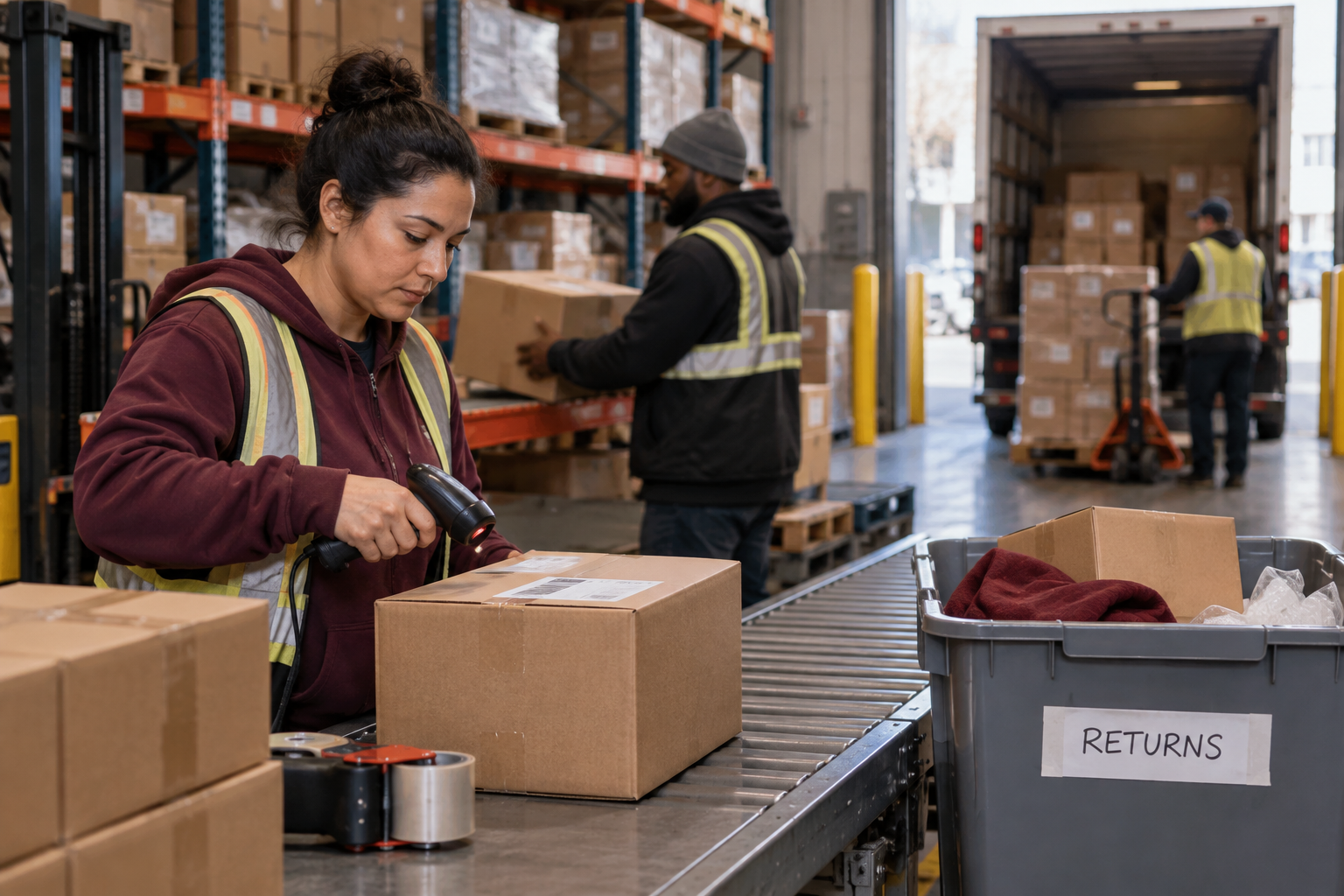
Inventory becomes an order
After receipt and putaway, stock must be visible and available to allocate. Order data then drives picking and packing instructions. Ask how the operation catches a mismatch between the system record and the shelf.
Delivery is not the final step
Tracking, customer exceptions, and returns extend the workflow beyond carrier handoff. A returned unit may need inspection before it can be sold again. Clarify who decides its disposition and how that decision updates inventory.
Follow one unit through the operation
Start with an incoming product and trace receipt, stock availability, order allocation, picking, packing, dispatch, and a possible return. Name the system record and human owner at each handoff. List the decisions your brand retains, such as replenishment, customer promises, and product instructions. This exercise helps turn a broad fulfillment service description into a division of work both teams can discuss.
Look closely at the handoff
Follow the physical item and the system record together. Ask what happens immediately before and after each milestone, then choose one exception to trace. A completed task in one team’s workflow may be only the start of another team’s work. Note those boundaries so the operating story reflects what actually needs to happen.
Use this question in your next meeting:
Which event changes the stock or order status, and who can resolve an exception?
Go deeper: Subscription kitting: where the monthly drop can get stuck. The companion article includes an editable worksheet and links to provider profiles.
Further reading
Shopify: inventory states. Reference for the distinction between available, committed, and other inventory states.