
The product name can stay familiar while the promise changes
Consider a brand replacing a 500-gram pouch with a 450-gram pouch. The color and product name remain similar. Warehouse staff can recognize the brand instantly and still select the wrong version. The changeover needs a clear physical and system boundary before the first new carton is received.
The GS1 GTIN Management Standard requires a new GTIN when the legally required declared net content printed on a pack changes. It also calls for new identifiers at existing higher packaging levels above the consumer unit. This is the specific net-content rule, not a claim that every artwork change requires a new identifier. GS1 GTIN Management Standard, section 2.3.
An identifier change is the beginning of warehouse coordination. The brand still needs to agree how its own SKUs, case records, sales listings and receiving instructions distinguish the versions.
A combined balance creates false confidence
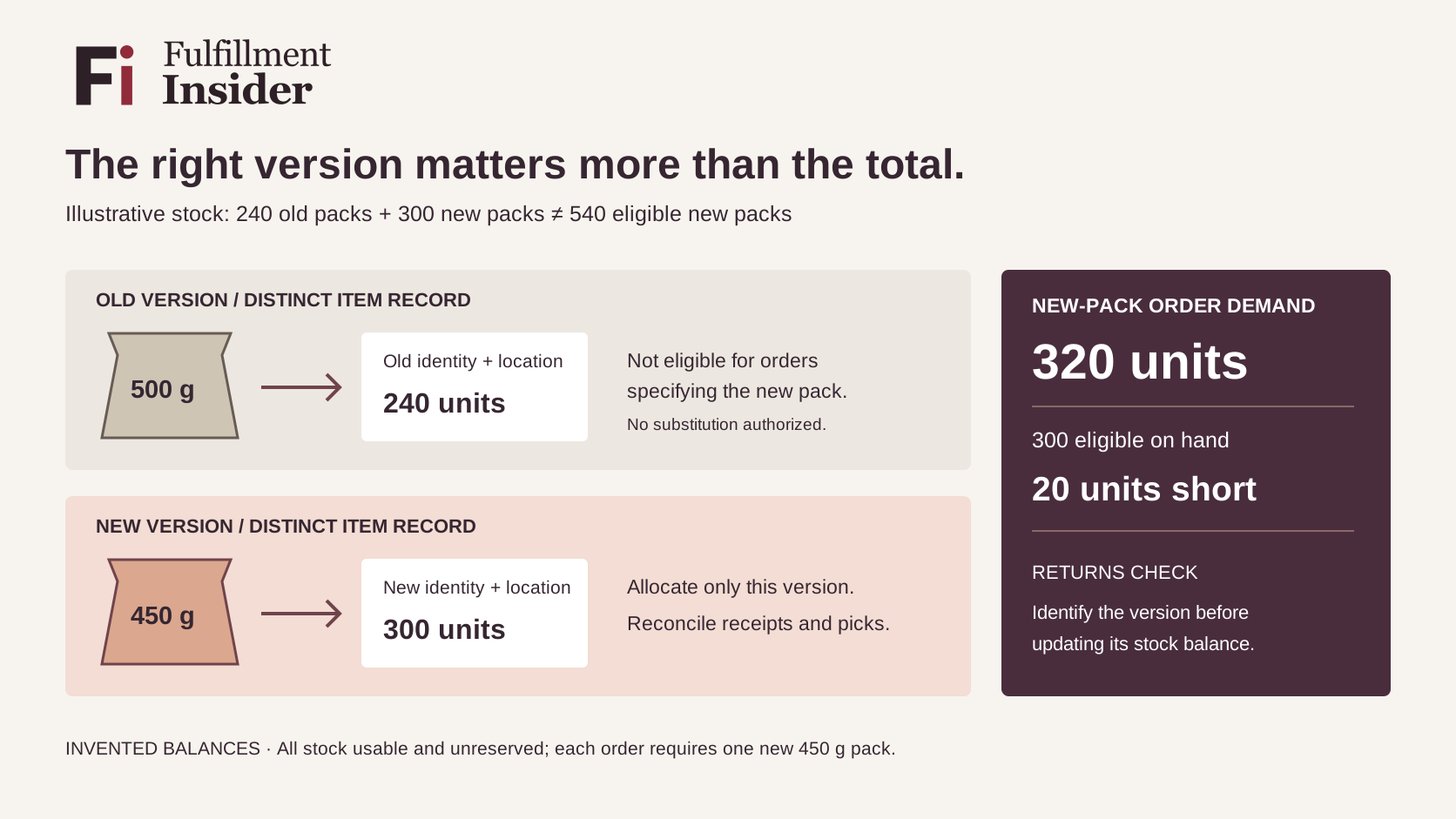
We constructed a hypothetical inventory record with 240 old 500-gram packs and 300 new 450-gram packs. There are 320 orders, each explicitly for one new pack. Assume all stock is usable and none is already reserved.
| Version | Units on hand | Eligible for these new-pack orders |
|---|---|---|
| Old 500-gram pack | 240 | 0 |
| New 450-gram pack | 300 | 300 |
A pooled display would show 540 units, yet the defined orders are short by 20 new packs. The old packs contain 120 kilograms in total; the new packs contain 135 kilograms. Neither the combined pack count nor total product mass answers the allocation question. The customer ordered a particular selling unit.
These are original calculations using invented balances. They assume that substitution has not been authorized. If the brand wants a different substitution policy, it must resolve the customer offer and applicable requirements before instructing the warehouse to treat versions as interchangeable.
Build the receiving boundary
Provide the 3PL with the old and new unit identifiers, case identifiers, declared quantities, pack photographs and expected inbound dates. Ask it to return the proposed item mapping for review. A spreadsheet sent by the brand is not evidence that every connected system has accepted the change.
Our suggested receiving check starts with one carton of each version. Scan the consumer unit and the case, confirm the resulting item identity, and compare the displayed description with the physical pack. This is a proposed acceptance exercise; we have not conducted it with a provider.
Keep unexpected or unrecognized identifiers out of normal allocation until someone resolves them. Do not use an improvised barcode alias merely to make a scanner accept the delivery. That can turn a useful exception into a hidden mapping error.
Follow the boundary through picking and returns
For the transition period, propose distinct storage locations or another clear physical separation appropriate to the operation. Confirm which open orders retain the old version and which require the new one. Reconcile the first receipts and first shipments by version, not only by product family.
Returns need the same distinction. An old pack coming back after the sales listing changes should not automatically increase the new-pack balance. Give the returns team a route for identifying the version and deciding its disposition.
Close the changeover with evidence
Use a short completion record: old stock remaining, new stock accepted, open orders by version, unresolved mappings and the owner of any residual old stock. Keep historical identifiers available for investigation even when an item is no longer offered for sale.
A clean changeover lets a worker, support agent and inventory planner describe the same product. If the warehouse can only tell you how many pouches exist, the transition is not yet controlled well enough to promise a particular pouch to a customer.
Related reading
Sources
Research accessed October 24, 2026.
- https://ref.gs1.org/standards/gtin-management/