
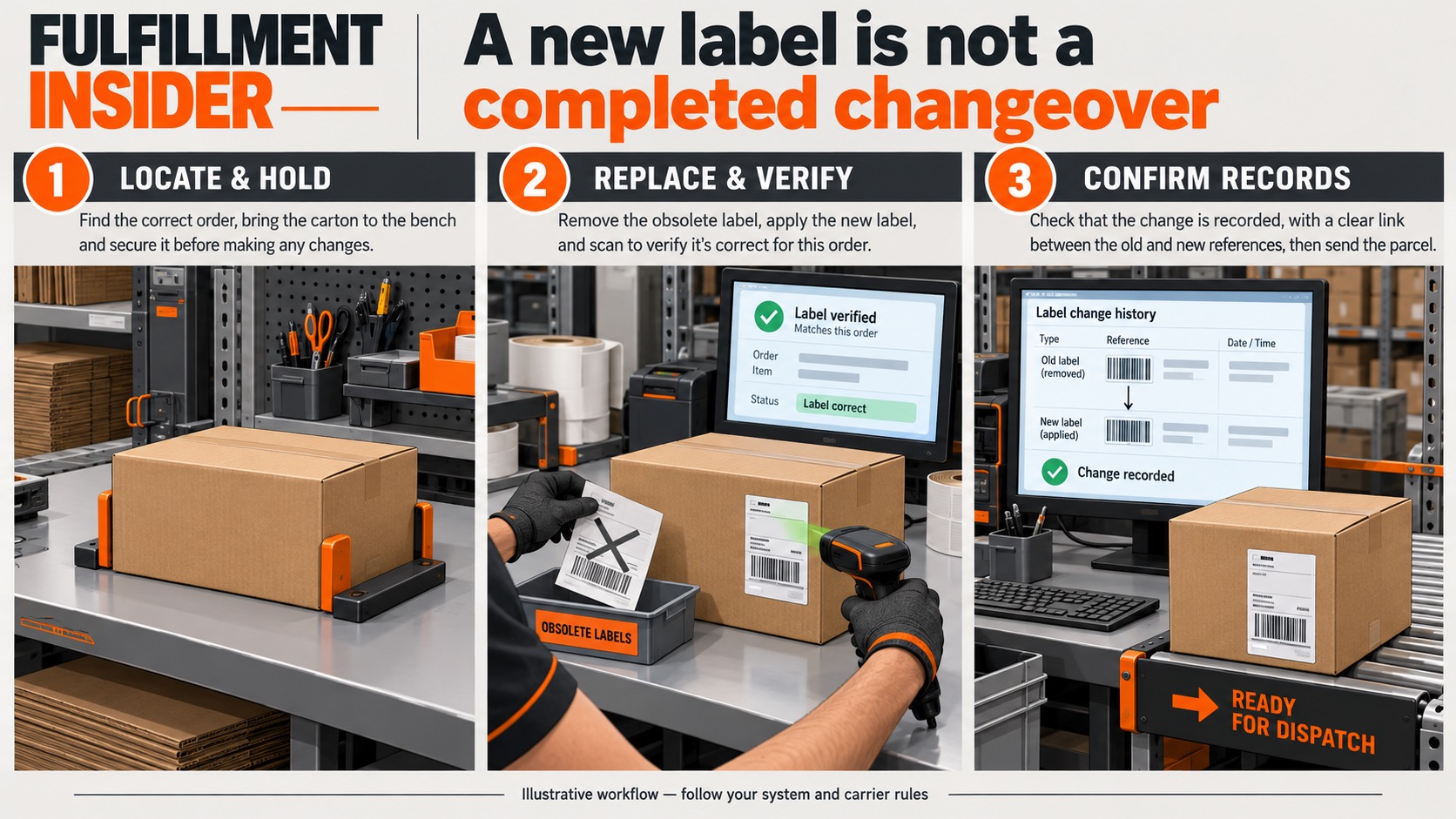
A replacement label can be correct in the system while the wrong label remains on the carton. The risk sits between the screen and the physical parcel: two printouts, one shipment and an operator deciding which one belongs on the conveyor. Treat label replacement as a controlled changeover.
Shopify documents a void, amend and repurchase process for changes to labels purchased through its workflow. It also lists eligibility conditions, including label age and tracking activity. Those rules do not establish what a 3PL's separate shipping system or carrier account permits. Check that system's actual process before instructing staff.
Identify the parcel before printing again
Record the original order and tracking reference, reason for change, physical parcel location and person responsible. If the parcel cannot be located, printing another label does not solve the problem. Hold the change request for investigation rather than creating an apparently completed task.
Distinguish a reprint of the same valid label from purchase of a replacement with a new reference. Both produce paper; they need different records. The instruction should tell the operator which action is authorized.
Walk through three stopping points
We constructed three desk cases to locate the control that is missing. These are proposed operating checks, not tests of a shipping platform.
| Parcel state | Main uncertainty | Proposed control |
|---|---|---|
| At packing bench | Two labels may be available | Match carton and remove obsolete label from use |
| In dispatch staging | Carton may enter the wrong collection | Locate and hold before replacement is completed |
| Already tendered | Warehouse no longer controls the carton | Escalate through the actual carrier process |
The third case is not an instruction to void an in-transit label. It changes the work from a bench correction to a shipment investigation. A warehouse should not report that a parcel was relabeled when it never regained possession.
Confirm the physical and digital result together
For a replacement, record the old and new tracking references as linked history. Confirm that the intended label is on the intended parcel and that obsolete labels cannot be accidentally used. Where scanners or dispatch controls are available, ask how they detect a mismatch rather than assuming they do.
Then review the customer-facing tracking reference and any shipping record that feeds another system. Do not erase the original history merely to make the screen tidy. It may explain an earlier notification, charge or carrier inquiry.
Give incomplete changes a visible status
A change request should remain open if the carton was not found, the system rejected the void, or the outbound record still points to the old reference. Separate those exceptions from successful replacements. A printed replacement is not evidence of completed physical work.
Ask a prospective 3PL to demonstrate this sequence using a sample carton and its own workflow before launch. No demonstration was conducted for this article. The acceptance question is concrete: can the partner show which parcel will leave, with which label, and what prevents the superseded label from being used?
Related reading
Sources
- Shopify changing and voiding shipping labels — accessed 2026-10-22.